
Titles are important. Take the action/thriller Snakes on a Plane. Screenwriter David Dalessandro shopped his screenplay Venom for five years before a big production house took a serious look. But it wasn’t until more seasoned writers Sebastian Gutierrez and John Heffernan renamed it that the ball really got rolling. Here’s what Samuel L. Jackson said about it:
“All I needed was to hear the title and I knew I wanted to be in that film.”
By comparison, not necessarily to Snakes on a Plane, but to films within its genre such as The Asphalt Jungle, In a Lonely Place and Touch of Evil, the title of Stanley Kubrick’s 1956 crime drama The Killing seems a bit plain. Undoubtably film noir–of that its star (did Sterling Hayden star in anything else, besides westerns) and original movie poster attest.

So there will be killing…of that we can be assured. Yet the film’s title alludes to a singular act.
Hollywood journeyman Hayden stars as Johnny, a low rung career criminal who abides by the thieves code of loyalty, self reliance and tight lips. Johnny has spent the last five years in stir plotting an assent to criminal respectability via a two million dollar heist of proceeds from a horse racetrack. His complex scheme requires two inside guys.
One of them, a ground down husband of an unfaithful, materialistic wife is a cashier at the track. His name is George. The other, Mike, is also married; his wife, sweet and bedridden, is in desperate need of expensive medical care. Mike is the track’s bartender.
To that mix add Marvin, an old friend with an implied sexual history with the much younger Johnny. Marvin, the financier of the heist, could complicate things, but Johnny is unconcerned. As is common in such transactional relationships, Johnny is not gay. He has a gullible, loyal girlfriend.
Finally there is Randy, a crooked cop inspired by his affinity for expensive suits, luxury apartments and life and limb. He’s in debt to a local mobster.
These are the principal conspirators–the loot to be split evenly between them– swimming in a plot manufactured by screenwriters Kubrick and Jim Thompson. (Yes, that Jim Thompson.) The plot and pot is stirred by the then twenty-eight year old Kubrick in his first meaningful foray as film director.
Kubrick cloaks The Killing in documentary style using stock footage of a horse racetrack in the opening credits and voice over narration to establish a non linear timeline. The narration, along with mock pedestrian camara work and natural lighting establishes a world of simplistic hyper realism evident when Johnny runs errands in the lead up to the robbery.
This is the lens that Johnny envisions the heist through.
The documentary style is abandoned in interior scenes where the details of the plotting and the messiness of the conspirators private lives are established. Here Kubrick imposes his tenacious, claustrophobic camera style along with classic noir lighting techniques that reveal the lines and lies on the conspirators faces, the texture of the walls closing in on them and the cracks in the armor they wear and the plans they make.
This is the intramural reality that we see.
The cast is made up of prolific character actors from the world of film noir handpicked by Kubrick himself. Standouts Elisha Cook (The Big Sleep, Phantom Lady, Born to Kill) as the relentlessly henpecked George and Marie Windsor (Force of Evil, Narrow Margin) as his wife, the repugnantly duplicitous Sherry, play the obvious foils in Johnny’s scheme.
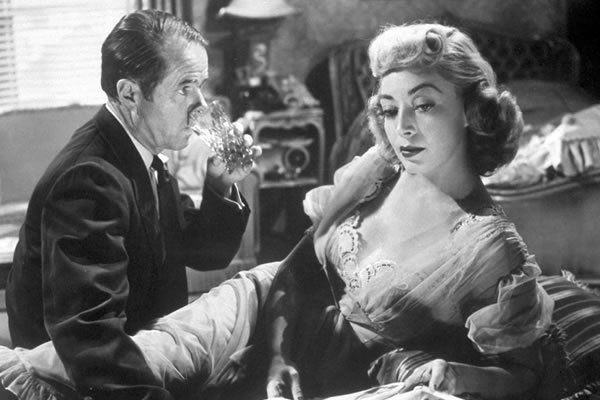
But it is the reliably understated Sterling Hayden who puts The Killing into motion. So caught up in the illusion of control, Hayden’s try-hard Johnny underestimates the devil who rests on his and his fellow conspirators shoulders. He forgets, or perhaps he’s never learned, that the devil also lives in the labyrinthic details of complicated plots devised by simple men.
 All Things Thriller
You are a master at this, Pam!
LikeLiked by 1 person
Thanks DW…and thanks for reading.😊
LikeLiked by 1 person
I’m heading into another trip through the crime/noir thing. Obviously this is on the program. Good stuff Pam. So much popping after your take. I could fill up a page talking about this one. Windsor and Cook are perfect. If I was making a film back then, I’d be checking on their availability.
LikeLiked by 1 person
Thanks CB. I could go on and on about The Killing. It’s one of my favorites. And, yeah…Elisha Cook, he’s so cringingly pathetic…a very unglamourous role to say the least…he should have been nominated for best supporting actor. Marie Windsor is almost as good. Superb film.
LikeLiked by 1 person
Pretty good handle for Elisha. Windsor and McGraw are a great team in ‘Narrow Margin’
Hayden was the right choice for the lead. Maybe it’s because after seeing him in the film I cant place anyone else in his place.
LikeLiked by 1 person
It’s funny…not so long ago I didn’t appreciate Sterling Hayden as an actor. This despite him being in five of my favorite films…The Asphalt Jungle, The Killing, The Long Goodbye, Dr. Strangelove and The Godfather.
Then it dawned on me…this guy has been in five of my favorite films, acting under three different directors…hmmm…maybe Sterling Hayden is a pretty good actor after all?…yeah, duh. Lol!
LikeLiked by 1 person
I know what you mean about Sterling Hyden. I found him hard to like until I came to appreciate how he could hold a film together. I recently re-watched ‘The Killing’ on a TV showing, and even knowing the ending, it managed to sweep me up in the plot all over again. Great overview, Pam.
Best wishes, Pete.
LikeLiked by 1 person
That’s right. He had the ability to hold a film together in a very low-key way. He was a gifted actor. Thanks for taking the time, Pete. Glad you’re back.
LikeLiked by 2 people
My first introduction to Sterling Hayden was in The Godfather
LikeLiked by 2 people
It’s well-worth exploring his film-noir past. He was in some great films.
LikeLike
My favorite is Five Steps to Danger
LikeLiked by 1 person
Is that a spy film? I vaguely remember it. I really like ‘The Asphalt Jungle’, very much of its time, but still good now.
LikeLiked by 1 person
I would say that you should not read the blurbs but just watch it first. I don’t want to give away the plot and some do.
Ruth Roman picks up Sterling Hayden on the highway in NM when his car breaks down, and it gets interesting from there
LikeLiked by 1 person
Dang it Pam…I totally missed this. I will comment tonight…I’m sorry.
LikeLiked by 1 person
No problem, Max. You know it’s not a quid pro quo thing with us. I’m a fan of your site and you’ve always been kind to support mine.😊
LikeLiked by 1 person
Oh Pam…I know that but I enjoy your takes! You can make me want to see a movie more than anyone else…
LikeLiked by 1 person
Thanks, Max.
LikeLiked by 1 person
I have this movie…thanks to Bailey…but I’ve never seen it before. As always you make me want to see it. I have it pulled up on my computer but I want to see it on our television. I can’t wait to see it now.
I’ve always liked his movies but I’ve only seen one that is older than 2001 A Space Odyssey and that was Lolita which I enjoyed. I will see this within a few days now…I’ll come back then. Thanks again Pam!
LikeLiked by 1 person
I can’t imagine you not liking it, Max. I’m eager to hear what stands out to you.
LikeLike
I thought I commented on this one? Perhaps I made the mistake of commenting with my tablet. When I do, things often go awry.
This movie was so good! And you are right, it is well titled, which I did not see until the end.
That last scene! Wow~! It was so good I had to show it to hubs and he did not fall asleep haha, and liked it too.
(sometimes b/w movies are very soothing and sleep-inducing to him)
LikeLiked by 1 person
Ha!…yes, that last scene. Very powerful.
I vaguely remember those days when passengers entered and exited the plane via the tarmac, I saw my mom deplane that way.
LikeLike
I have only seen that in the movies, but I do remember being able to see someone off at the gate, or wait for them there. I miss that
LikeLiked by 1 person