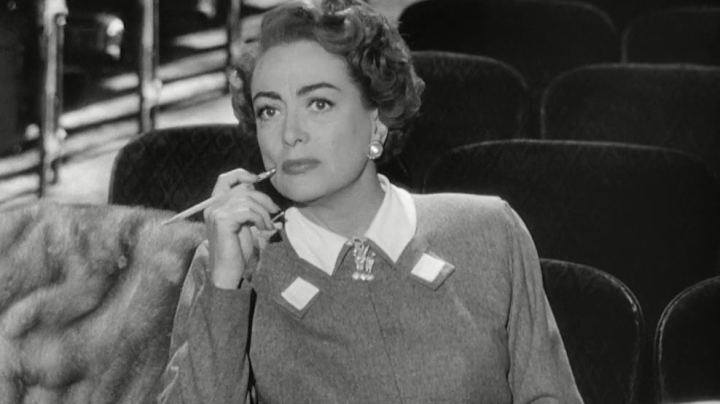
Joan Crawford was about forty-five years old when she starred in Sudden Fear (1952). I use the qualifier about because no one (including the late Ms. Crawford) is sure of the actual date of her birth. Somewhere between 1904 and 1908 is the general consensus.
Though it might seem a silly obfuscation for the sake of vanity, it wasn’t considering birth certificates weren’t mandated until around 1902. And since her father abandoned the family when Crawford was an infant and her impoverished mother viewed her daughter as a hardship instead of a blessing, it stands to reason that the day of her birth was neither documented or celebrated.
In her later years, Crawford shrugged off the controversy. “I’m four hundred years old!” she quipped. “The most I can do is look three hundred.”
The quip was a close as she’d come to making a public statement about her age or birthday; the ambiguity of it shaped more from a neglect than conceit.
And while today’s forty-five may be the new thirty-five, in 1952 there was nothing new about it. It was just old.
Especially if you were a woman.
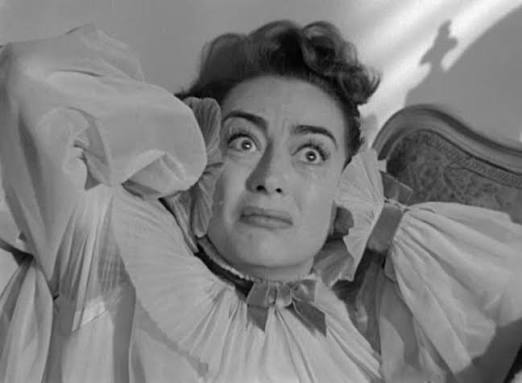
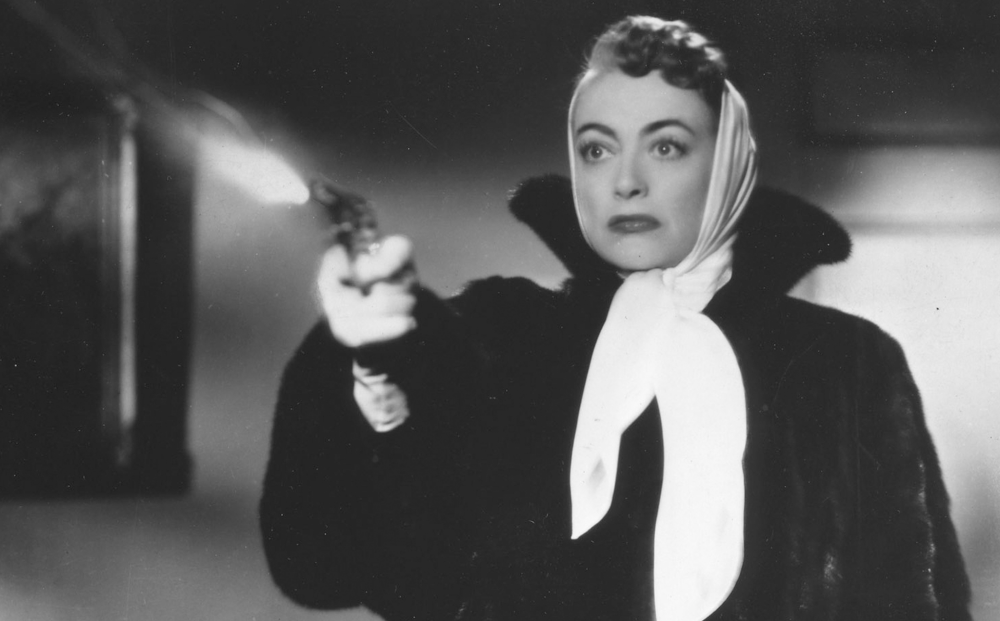
But Joan Crawford wasn’t the type to go quietly into the cell of a has been. Far from it; she rammed headlong into its bars instead, acting on instinct and the resilience of the survivor she’d always been. And in Sudden Fear, a more modest vehicle than she was accustomed, but one she accessorized to the hilt nonetheless, she made, perhaps, her most daring escape.
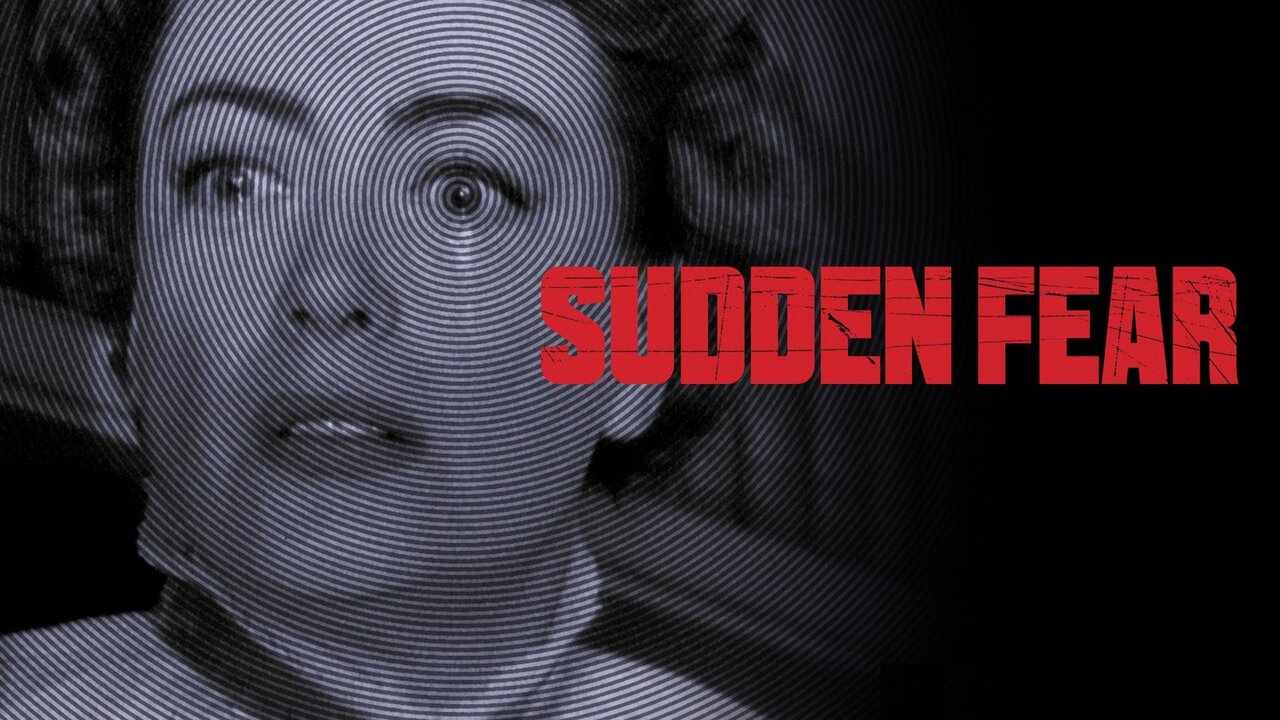
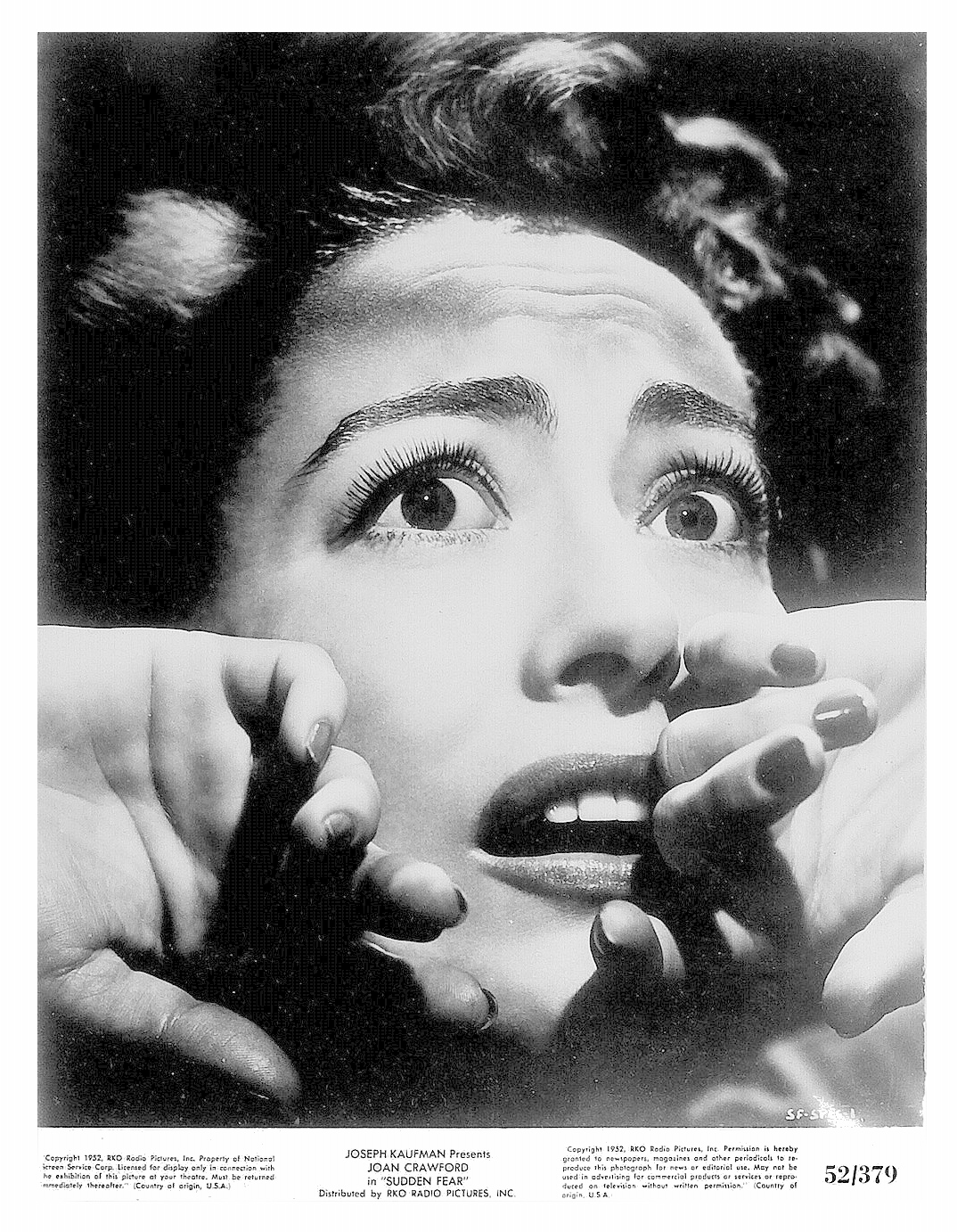
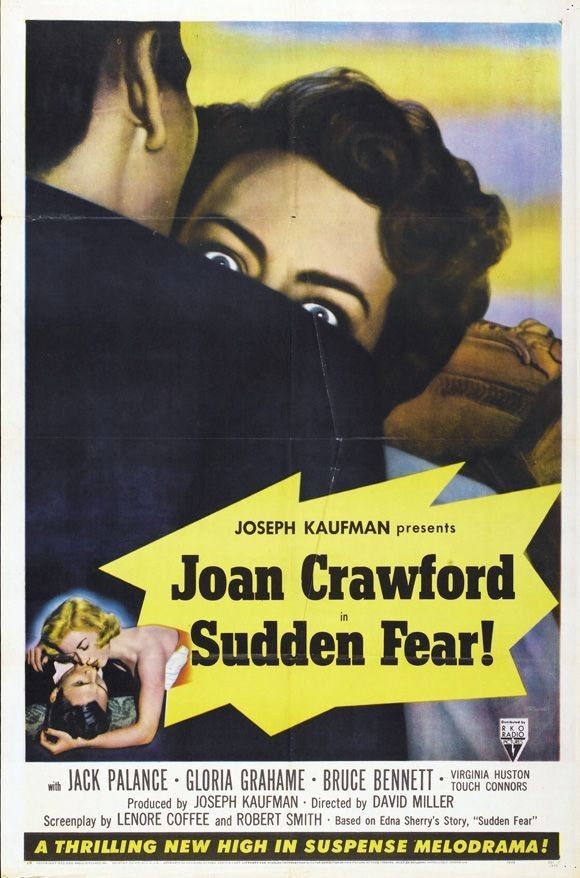
A Foray Into Independent Film
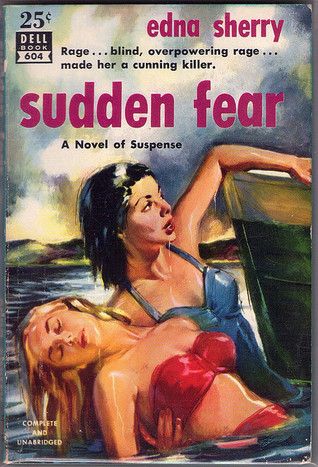
Dissatisfied with what she considered lackluster roles and less than exuberant representation, Crawford left Warner Bros in 1952, much the same way (and for the same reasons–namely they were interested in younger talent) that she left MGM nine years earlier. Finding herself an orphan without a studio home for the first time since she was a chorus girl, she learned that independent film producer Joseph Kaufman had purchased the film rights to the Edna Sherry’s pulp thriller Sudden Fear.
Crawford read the novel and envisioned herself as the protagonist Myra Hudson, a smart, successful playwright who falls for a younger man and becomes involved in a in a sordid and ultimately violent love triangle with her paramour and his former girlfriend…just the sort of role that had made her a superstar in Mildred Pierce. Nothing if not opportunistic, she approached Kaufman about staring in the film.
From purely an opportunistic perspective, she seemingly met her match with Kaufman. Not wanting to insult the notoriously egocentric star with a contract he could actually afford, he offered her a percentage of its proceeds instead–on the face of it, a shrewd move, almost unheard of at the time.
Here, however, he may have underestimated Crawford’s business acumen and/or powers of persuasion–an understandable miscalculation given her tendency to flaunt a lavish lifestyle.
Whatever the case, Crawford walked away with an astonishing forty-three percent ownership and her fingerprints all over the film.
Using her considerable clout, she hired director David Miller, an old hand technician who needed a hit as much as she did. And though known as problematic and strong willed in her her own right, Crawford campaigned for the seminal, scene stealing siren Gloria Graham to star as the…seminal, man stealing siren (man-eating is more like it) Irene Neves.
For her character’s love interest and nemesis, Lester Blaine, she settled for Miller’s choice of ex-boxer and up-and-coming method actor Jack Palance when former lover and close friend Clark Gable turned down the role.
Arguably, Crawford’s best hire was the esteemed, academy award winning cinematographer Charles Lang, who she had known since their silent film days.
Together they constructed a beautiful and brilliant celluloid anomaly of contrasting styles in acting–method verses technical, and in genre–gritty noir masquerading as a lush melodrama, gloriously shot on a modest budget.
But contrast inspired not only creativity, it bred friction too, as was so often the case with projects involving Ms. Crawford.
Trouble On The Set
Though she could be generous, loyal and unexpectedly kind, Crawford was a no nonsense taskmaster when it came to filmmaking–and she expected everyone else to be as rigidly punctual and hardworking as she was. On the other hand she loved to play the grande dame, traveling to the set with an entourage and making a big show of greeting each member of the crew; all of which irked Palance as much as his method acting exercises and chauvinism irked her.
It was Gloria Grahame, though, who really got under Crawford’s skin.
Vain, whip smart, but emotionally vulnerable, she was also talented (professionally trained since childhood by her stage actor/acting coach mother). Grahame had been nominated for a Best Supporting Actress Oscar in Crossfire (1947) in which she appeared in all of two scenes as a world-wise working girl–a performance that Crawford openly admired.
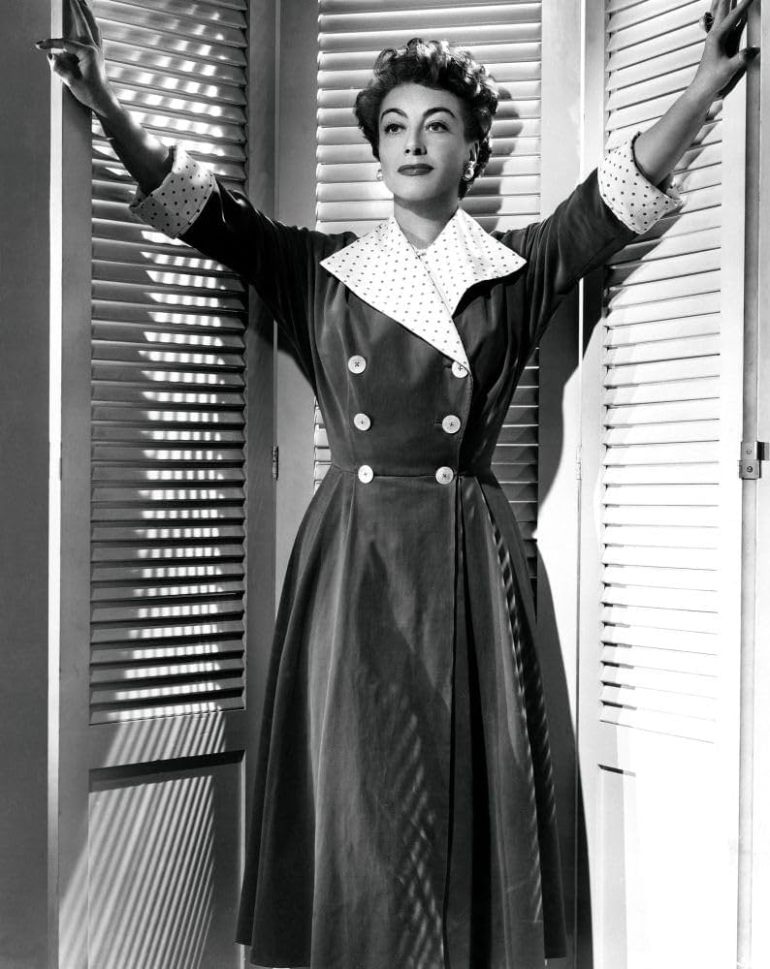
The admiration did not impress Grahame, however. Nor did she acquiesce to Crawford’s “set rules.” Consequently the grande dame labeled her unprofessional and went about undermining her in petty ways, such as deploying the silent treatment and insisting that Graham’s wardrobe come off the rack, whereas her own strained the independent film’s budget.
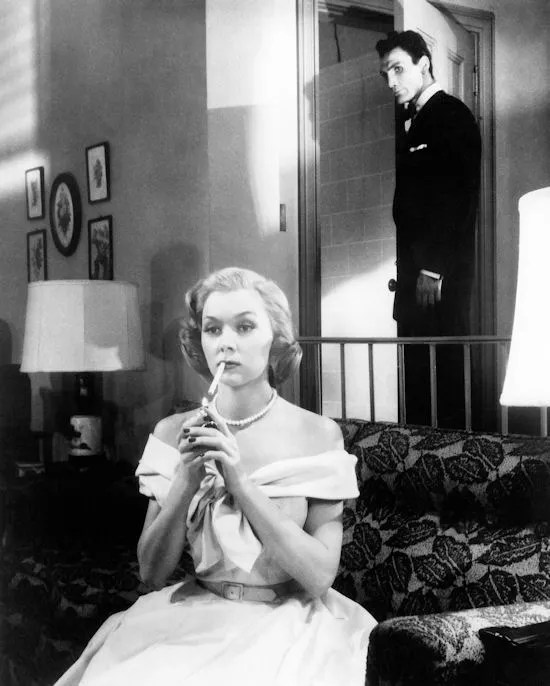
But it was Grahame’s affair with Palance that pushed passive aggression to outright shove.
Initially Crawford was appalled by Miller’s choice for leading man. The actor’s famously jagged face had been disfigured from his bouts as a prizefighter and from burns he suffered as a WWII pilot.
“How can you do this to a queen?” Miller recalled her moaning when he stood his ground on Palance. “Don’t you realize that I have played opposite the biggest stars in film? Gable, Tracy, Taylor, Cooper! He’s the ugliest man alive!”
Nonetheless she came to consider his aloofness a challenge to her feminine wiles. The two even went on a couple of dates.
But Palance was more attracted to the much younger Grahame. And, of course, that infuriated Crawford.
The last straw came when Grahame snuck onto the set–she had been banned when Crawford was filming closeups–and loudly sucked on a lollipop.
Crawford lost it. She attacked Grahame and fistacuffs ensued before they were pulled apart by the all male crew.
Still, they soldiered on–not that any of them ever seriously considered doing anything else; Palance and Grahame were relative newcomers to Hollywood, both of them still skirting serious stardom. They sought to parlay bigger and better roles off the success of Sudden Fear.
And the word quit wasn’t in Crawford’s vocabulary.
All of them…director David Miller, producer Joseph Kaufman, cinematographer Charles Lang…the actors and crew…RKO Studios…and Joan Crawford, especially, needed a big hit.
From that day until the film was wrapped, Crawford stayed away from Palance and Grahame whenever possible…and they stayed away from her.
She channeled her rage and resentment into her role instead.
Sudden Fear was a box office success, netting Joan Crawford over a million dollars and her third Oscar nomination for Best Actress.
Moreover, the success of the film parlayed her return to MGM and her reemergence as a grande dame of Hollywood.
Crawford’s nemesis, Bette Davis was also nominated the same year (1953) for her role in The Star. They lost to Shirley Booth in Come Back Little Sheba.
Jack Palance was nominated for Best Supporting Actor for his role as Lester Blaine in Sudden Fear. He parlayed his nomination into the role of the villain in the landmark Western Shane. It was the role that made him famous.
While Gloria Grahame was not nominated for her performance in Sudden Fear she won the Academy Award for Best Supporting Actress the same year (1953) for her role in The Bad and The Beautiful. For years she held the record for shortest appearance–all of nine minutes–in an Oscar winning role.
Charles Lang and Sheila O’Brian capped off the Sudden Fear Oscar accolades with their nominations for Best Cinematography and Best Costume Design respectively.
In addition to Sudden Fear, Charles Lang was nominated for the Best Cinematography Oscar an astonishing seventeen times, including his win for A Farewell To Arms (1932).
Sudden Fear was producer Joseph Kaufman’s biggest hit. It’s financial and critical success bankrolled his subsequent film endeavors until his death in 1961.
Despite surviving years of disastrous mismanagement by Howard Hughes, RKO continued to have cinematic gems under its belt, Sudden Fear being one of many. But their stable of hits during this period did not move the needle on the bottom line. In order to stay afloat, RKO ceased nearly all of its production, becoming merely a distributing house of independent film.
Though David Miller was overlooked by the Academy, Sudden Fear is considered by many historians as the director’s crowning achievement.
It was Miller’s ability to meld the genres of noir, melodrama and suspense into a cohesive unit that gave the film the foundation to build on; not to mention his steady hand holding the whole thing together when his volatile stars threatened to pull it apart that ensured there would be a film in the first place.
Yet, for all of this, it was the fostering of his aging star’s talent–yes, his willingness to build around Crawford’s theatrical idiosyncrasies (without being overcome by them) that elevated a potentially ordinary noir to an extraordinary classic:
- the facial expressions perfected during the silent era that she never moved away from
- her penchant for backless gowns and insistence on showing off the dancer’s legs she had sculpted as a flapper
- her fanatical obsession with exercise that manifested in overt on screen physicality
- the ability to take the actors “business,” e.g., tapping of a pencil on a desk, lighting a cigarette, twirling a telephone cord between her fingers to an almost uncanny level
“There is not a shot in this film that isn’t necessary to its dramatic progression. Not a shot, either, that isn’t fascinating and doesn’t make us think it’s a masterpiece of cinema.”
—François Truffaut
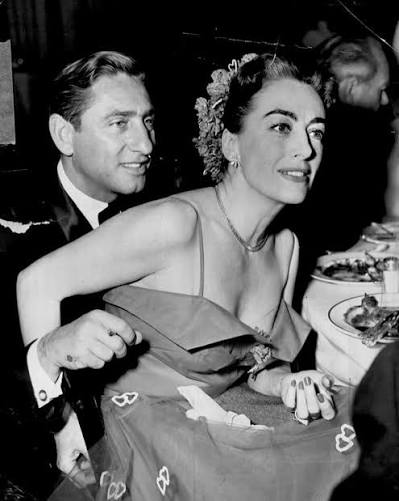
David Miller and Joan Crawford


Wow…I love this sort of backstage badness. Many times the story of the movie is better than the movie itself…. even great movies. I didn’t know this one helped Jack Palance so much. Also…I looked up Gloria Grahame…ah she was Violet Bick in It’s a Wonderful Life!Something about Crawford and Davis. They would hire actors/actresses they knew would be trouble for them…and I think they did it on purpose because somehow, it upped their game when like you said, they transferred that tension in their role. I’m certainly not an actor…but that would be my guess.
Wonderful post Pam! I love these.
LikeLiked by 1 person
Thanks so much for reading, Max. Yes, I agree that often the behind the scene stories about films are better than the movies themselves. Yes, even great films, like you say.
If you aren’t that familiar with Gloria Grahame, check out some of her films. She’s known as the queen of Noir–and for good reason. The Big Heat is a good place to start.
LikeLiked by 1 person
Ok…I will check that out. I really like those old noir films. I watched some a while back when you blogged something about them. I have a few…. Kansas City Confidential and Armored Car Robbery. I’ll check out The Big Heat. I didn’t know that about her but…after I read your post….I saw some things she was in and I watched her in an episode of Tales of the Unexpected – Sauce for the Goose in 1974. It’s on YouTube as well.
I love to read the stories of the making of What Ever Happened to Baby Jane?
LikeLiked by 1 person
Oh, “…Baby Jane” would be a good one to do. I don’t know that much about what went on, but I do know it’s juicy. You should do that one. It’d be great.
LikeLiked by 1 person
Oh Pam it’s for you. I would love to read it. These ship posts take me forever. I’ve been working on a short one but it’s taken me 3-4 hours today. The story is a mix between Agatha Christie and The Twilight Zone.
I can do music posts in 30 minutes or less…these things make me work. I can’t imagine creating stories like you do.
LikeLiked by 1 person
Max, I knew you’d say that, lol. But I’m serious, I think you’d do a great job if it appealed to you. Your ship posts are fantastic.
I know what you mean about all the work you put into your ship posts…that’s why I don’t do too many posts like the Joan Crawford one. I put in way too many hours on it. Seriously, it took me days.
Anyway…I’ll get to your sites soon. I know your not worried about it, lol, but I really enjoy your posts. I’m just recovering from all the work. Ha! (But, I’m being serious.)
LikeLiked by 1 person
Yes…that is what I meant…so much time! It’s so much time but you know what? I love every minute of it. I’m happy I got a new passion along with music/baseball. I do have some posts waiting on Tom Snyder show and a few other things. I have to find a place/time where I can post them.
I’m NOT worried about it at all Pam. You have read enough of my posts to last a lifetime lol. Hey it’s Labor Day weekend on top of everything. You see how late I am to yours most of the time because I don’t look at blogs usually Mon-Thursday… of course I’m off tomorrow.
But yea…I love writing the more serious stuff now as well.
LikeLiked by 1 person
Can’t wait for the Tom Snyder stuff.
LikeLiked by 1 person
Sounds like you have an awesome record collection. Favorite album in your collection?
LikeLiked by 1 person
That’s a hard one. I hate to narrow it down to just one…so I’ll give a few of my favorites:
Janis Joplin, Pearl
Al Kooper , The Live Adventures of Michael Bloomfield and Al Kooper
Al Kooper, Soul of Man
Rolling Stones, Some Girls
The Original Motion Picture Soundtrack, Times Square
Def Leppard, High and Dry
Talking Heads, 77
The Beatles, Red Album
The Beatles, Blue Album
Chic, C’est Chic
LikeLiked by 1 person
That’s an eclectic mix! My vinyl collection is smaller than that, hundreds from 1960s-1980s. I’m glad I kept them especially after CDs came along.
LikeLiked by 1 person
I’m a music lover–not just rock, though it’s my favorite. And my definition of rock is broad. My influential years were late 70s to mid 80s, so that was a pretty eclectic era. 😊
We have a lot of CDs too. My husband is an audiophile so we even have music on reel to reel…and he still has some quad 8-tracks and the remnants of a quad system. Lol! All this takes up way too much space in our modest home.
Anyway, the only thing I regret about our record collection is that we don’t have more singles. That’s where the money is. Plus, I love singles.
LikeLiked by 1 person
I know about the space issue!
LikeLiked by 1 person
Great post Pam 🙂 I loved hearing all the stories about Joan Crawford’s relationship with the other crew 🙂 Among other interesting things was reading about Joan Crawford’s anger towards Jack Palance for his affair with Gloria Grahame 🙂 Then again, everything in your article is insightful 🙂 A simple sublime blog entry 🙂 P.S. I also love that Francois Truffaut quote 🙂
LikeLiked by 1 person
Thank you, John. It pleases me very much that you enjoyed the post. I remember we reminisced about Sudden Fear before and that you are a fan of the film. I am too. It’s very stylish, I think.
Thanks again for reading.
LikeLiked by 1 person
You are quite welcome Pam 🙂
LikeLiked by 1 person
So interesting Pam, thanks!
LikeLiked by 1 person
No. Thank you June for reading.😊
LikeLiked by 1 person