Menu Close

All Things Thriller

A Celebration of Thrillers, Noire and Black Comedy by Pamela Lowe Saldana

Bone Tomahawk, 2015; A film directed by S. Craig Zahler, Independent

A few years ago KFC graced us with the “Famous Bowl”, a concoction of mashed potatoes topped with corn, chicken nuggets, brown gravy and cheese. It was weird. And it sucked.

Director S. Craig Zahler’s debut film Bone Tomahawk is kind of like that. It’s a concoction of genres and sub-genres–Western, Horror, Black Comedy, Splatter Film and Road-Trail Journey. It, too, is weird. But unlike the “Famous Bowl” it’s pretty damn good.

The plot is nothing new; in fact it harkens back to classic cinema, most notably John Ford’s The Searchers.  Here Mr. O’Dwyer’s (Patrick Wilson) wife (Lili Simmons) has been abducted by savages —not Native Americans, the script is quick to point out, but troglodytes, a.k.a cave dwellers–inbred, cannibalistic ones, at that.

Now as bad as that is (it get’s worse, way worse) Mr. O’Dwyer is an invalid, recuperating from a gruesome compound fracture to either the tibia or fibula. He is an earnest, reverent man who loves his wife dearly (she’s a doctor, no less) and no bone protruding through the flesh is going to stop him from rescuing her. To that end a search party is formed. The leader of the party is the honest and just sheriff (Kurt Russel), his dutiful deputy, Chicory (Richard Jenkins) and a dandified, taciturn gunfighter named Brooder (Matthew Fox).

At it’s core Bone Tomahawk is grindhouse exploitation, although there are plenty of sophisticated flourishes most readily apparent in the superb ensemble cast. Though each character represents a dyed-in-the-wool type, the actors play sincerely and naturally off each other and, consequently, I grew to care about each of them, especially “back up” Deputy Kory. Academy Award nominee Richard Jenkins gives a bravo performance as the kind-hearted, ageing lawman, who at first glance seems a dullard, but I later realized is really a child-like poet instead.

Zahler allows time for character development and, though this is the strength of the piece, he’s been criticized for it. Personally, I loved the dialogue driven first three quarters of the film. The Zahler penned script is funny, clever and nuanced. The men talk about women, food and politics.  I never once checked my watch.

Although the film opens with bloodshed and there is violence through out, it is largely implied. The third act is where the gore and body count–and excellent special effects– finally kick in.

The troglodytes are something to behold. They’re huge, mostly naked and are clearly fascinated with bone body jewelry. They communicate with each other in Neanderthalian grunts (not so unordinary) and battle cry wails emitted through a whistle device, constructed of bones, embedded in their larynx (quite extraordinary).

Oh, and did I mention the troglodytes are cannibals? Yeah, are they ever. They scalp this one guy (once again, not so unordinary considering the subject matter) and then–keep in mind he’s still alive–they turn him upside down and literally pull him asunder by wrenching his legs down (absolutely, freaking, horrifying). The poor guy’s guts gush out in a hemorrhaging heap.

By this time I was invested in the decent and capable, but manfully blundering searchers and the way smarter, but still damsel in distress, lady doctor. I hated to see any of them go–especially the way of the wishboned guy–but despite it’s mashup sophistication and superior ingredients, Bone Tomahawk is still a horror movie. And a horror movie demands what a horror movie demands–sacrifice.

Hounds of Love, 2016; A film directed by Ben Young; Australian

In Greek mythology Cerberus is a three-headed monster hound that guards the gates of hell, hence the phrase “hounds of hell”. In director Ben Young’s horror film Hounds of Love three characters are grafted together for the sake of–I hesitate to even go there–love.

The film opens in a mundane, slightly gritty neighborhood. The camera swoops down over a barely distinguishable couple in a parked car and into a school yard where teenage girls are exercising. It lingers on midriffs and lithe limbs in slow motion and intermittent stills are thrown in giving the scene a herky-jerky unease. Tracers emanate from nubile bodies.

A bell rings and the girls disperse to their own cars or to those of parents and friends. One girl walks down the street alone. A nondescript car follows at a respectful distance and gradually catches up as she strays further from the school. We catch unceremonious glimpses of the driver and his passenger. A friendly woman’s voice calls from the passenger window, offering a ride. It is hot.

Hounds of Love is not your typical horror film. There are no bells and whistles here. Based on the crimes of Australian serial killer couple David and Catherine Birnie, it is  economical to the extreme. And boy is it brutal–but not with the traditional horror signatures of blood and guts. The violence is largely psychological, though we see disconcerting evidence of the physical kind too, e.g., split lips, torture devices, bloody wadded tissues strewn about–and then there are the screams, muffled by low flying airplanes.

Stephen Curry is appallingly evil and scary good as psychopathic sadist John White. He has the fetid look and id of a weirdo hanging out at a drugstore magazine stand. Interacting with boorish neighborhood thugs he bears his underbelly submissively, but with his wife–and partner in rape and murder–he is, predictably, all alpha male. We are repelled by him but understand him nonetheless. He gets his jollies from dominating, humiliating and killing young women.

His wife Evelyn (Emma Booth in a tour de force performance) is more complex. As a woman, I found her particularly deplorable. I didn’t want to understand her, let alone empathize with her, and yet I did, which makes her performance all the more remarkable–and horrifying. There is a mantra among thespians: “acting is listening; acting is reacting”. Booth is a masterful listener. Her lines are sparse and she never anticipates them. It is her expressions and her granite hard eyes, softening here and there, just a bit, that tell her story.

Vicki (Ashleigh Cummings) is the couple’s victim. I say this unapologetically. She is a teenager, after all, and not nearly as worldly as the semi bad ass she tries to project. That is not to say that she is stupid. Hardly. Cummings is convincing as the resourceful, insightful Vicki. And she is brave. She tries to physically fight off her captors but, of course, it’s two against one. Gagged and chained to a bed, she could just check out and resign herself to a hopeless fate. She doesn’t. Instead she summons her considerable wile, will and intuition in a valiant effort to manipulate the twisted relationship.

This is a stunning debut film for director Ben Young and he is no stranger to the subject matter. Yes he is Australian and keenly aware of the Birnie murders, but perhaps more importantly, his mother is a true crime writer. From an early age he has been schooled in deviant psychology. Young made Hounds of Love on the cheap and the budget constraints magnify its stark, hyper-realistic affect. There are a few sly stylistic flourishes though, such as the slo-mo opening sequence.

If all of this has a familiar ring, don’t be too complacent. If you’ve seen Henry Portrait of a Serial Killer then you’re hip to program. Otherwise, prepare to be overwhelmed.


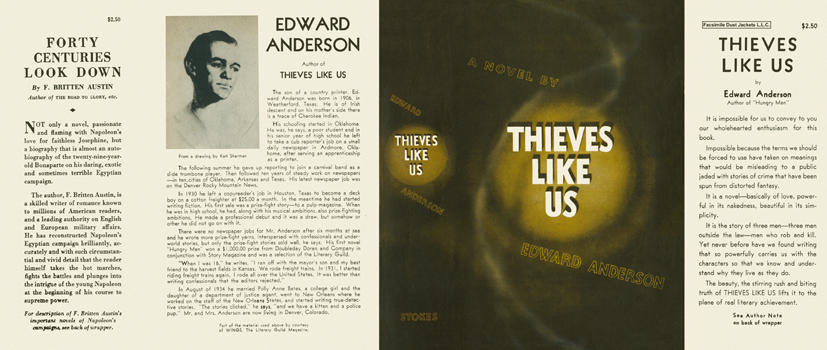
Thieves Like Us, A Novel by Edward Anderson; Depression Era; Inspired by the exploits of Bonnie Parker and Clyde Barrow

Part One

Bowie is really just a kid, maybe twenty-one, twenty-two at the most. Even though he’s been in prison–for murder no less–and has recently escaped, he’s not streetwise. He’s actually pretty naive.

Don’t get the wrong impression–he’s a murderer, straight up. And he’s dangerous. But not because he wants to be; because he has to be. It’s ’cause he’s grown up hard and poor. The Great Depression. Lot’s of folks did stuff then that they wouldn’t have otherwise.

Bowie escaped with two prison buddies. T-Dub and Chicamaw. Now those two are a different story.

Take T-Dub for instance. He’s not exactly as mean as he is schooled in the ways of crime. He’s an ole pro. And when I say ole I mean he’s old–about seventy.

Chicamaw’s not that old. He’s the mean one, but if not for him Bowie would have never met Keechie. She watches over the filling station where they’ve been hiding out. Keechie is Chicamaw’s second cousin. She doesn’t like him though.

Keechie’s not pretty and she knows it. But she is smart. Her life’s been hard too, but she’s no criminal. Even so she falls in love with Bowie. They split up from the other two and run off together.

While Chicamaw and T-Dub are womanizing and liquoring it up, Bowie and Keechie are holed up in a little cottage living very ordinary lives except when the money runs low. Then Bowie teams up with Chicamaw and T-Dub and they rob banks.

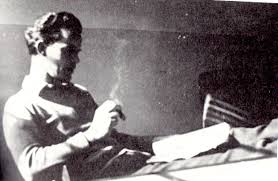
Edward Anderson was in every sense a journeyman writer. The son of a printer’s apprentice, he wrote pulp fiction and lurid true crime stories for tabloids; and like so many other writers of his time, he–a native Texan–made a pilgrimage to Europe for inspiration. He didn’t stay long.

Back in the states, he traveled to Hollywood and, for awhile, became screenwriter. But success proved to be a big tease and he habitually found himself back in Texas where he wrote for droves of newspapers. And like many other young men of his generation, he hopped freight trains and ate in soup kitchens. He was hungry. It was the Great Depression.

From his experiences as a hobo he found inspiration and wrote Hungry Men, a novel about hard times and the desperation of those subjected to them. Generally well-received, it was blunt and potent, but not without sentiment. Anderson was a skilled boxer. He knew how to pull his punches in the ring and on paper.

As for news writing, Anderson found it to be a mundane, dehumanizing slog–no better than writing for the tabloids. He became distrustful and embittered toward the press. Lots of folks felt like that–resentful and at their wits end. This was during the same time that Bonnie and Clyde were running the back roads of Texas, holding up filling stations and grocery stores for a pittance and, on a rare occasion, robbing banks for good chunk of change.

Except for three things, Clyde Barrow was just your garden variety low-life: (1) he was extremely resourceful; (2) he was an incredibly elusive, highly skilled driver; and (3) his main partner in crime was his girlfriend, Bonnie Parker. In fact, there is little doubt that if it hadn’t been for Bonnie, very few of us would have heard of Clyde and, if we did, none of us would have cared.

Nonetheless, despite the tabloids insistence otherwise, Clyde was the leader of the gang when there was one and the dominate partner when it was just him and Bonnie–which was most of the time. (Clyde had the tendency to be a dictatorial asshole and Bonnie was about the only person that would/could put up with him.)

They both came up hard–their small stature (he was 5’4”; she was 4’11”) was probably due to malnutrition–especially Clyde who lived with his family under a wagon when they first migrated to Dallas from cotton fields of Telico. From the front porch of his family’s shack in a squatters slum, Clyde could see the shimmering skyline of Dallas proper. Unwilling to resign himself to a life of backbreaking work just to barely get by, he turned to crime young. He stole about anything he could get his hands on, mainly so he could dress nice and impress the girls.

About the only girls a guy like Clyde–one that came from the muddy, rat infested dirt roads of then unincorporated west Dallas–could impress, nice clothes or not, were fellow and equitably desperate camp girls. But maybe–just maybe–if he had the right swagger and can do spirit, he might be able to snag one from Cement City, the bleak as hell corporate commune down the road. As fate would have it, Bonnie Parker lived there.

Thieves Like Us, A Novel by Edward Anderson; Depression Era; Inspired by the exploits of Bonnie Parker and Clyde Barrow

Part Two

The thing about Bowie, Keechie knows, is that he’s loyal–too loyal to T-Dub and Chickamaw. T-Dub’s an old lech. He throws money at bimbos. And he likes to drink. Chickamaw’s a flat out alcoholic and he’s a hot head deluxe. Plus–and this is the worst thing–he’s jealous.

All of this attracts too much attention, and if Bowie keeps doing business with them he’s going to get caught. She tries to tell him, but he won’t listen. They even argue about it and they hardly ever do that.

Of course Keechie has every reason to be worried; Bowie has already killed a police officer. He had to, she reasons, if he didn’t the cop would have killed him.

Sure enough ole’ T-Dub gets himself killed in a shoot out with the cops and Chicamaw gets thrown into jail. It’s the electric chair for him for sure, unless Bowie can break him out.

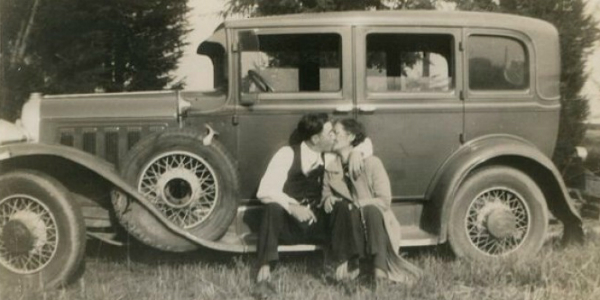
In today’s parlance Bonnie Parker would be described as drama queen. In her day people called her a pistol. Just how apt the later description is depends on the historian. Most contend, that despite having a predilection for being photographed brandishing them, she probably never fired a gun in the commission of a robbery.

Bonnie’s father died when she was four and that proved cataclysmic for her family. Up to then the Parker’s were comfortably middle class. Emma, Bonnie’s mother, liked to project herself as affluent. While Charles Parker’s death didn’t dampen her attitude, it devastated her pocket book. Unable to provide for the family in their hometown of Rowena, she had no other choice but to move them to her parents home in Cement City.

Whereas Emma was an unqualified snob, Bonnie was a product of her environment. Cement City was rough. She palled around with bad boys and even had a couple of tattoos (scandalous at the time). Nonetheless her mother had taught her that she was special and she believed it–when she wasn’t bored or depressed. Whenever a camera turned up within her personal space, she jumped in front of it.

Bonnie was twenty-one and estranged from her husband–a two-bit thief–when she met Clyde Barrow. She was babysitting a friend with a broken arm when he dropped by to visit. Fresh out of prison he was skinny as a rail and not much to look at, but you couldn’t tell him that. He oozed bravado. It was love at first sight.

There was a lot riding on Edward Anderson’s second novel. Important things like providing for his wife and children. The matter of his pride; and, perhaps the most important thing, having the ability to feel good, hopeful even, about the future and his place in it.

If things didn’t work out he could always get another job writing for a paper. Or the tabloids.

He bought a car and drove his family into the Texas hill country where they rented a cabin around the outskirts of Kerrville. There Anderson felt more at ease than in Los Angeles where he was regarded as talented–he was one of Raymond Chandler’s (the father of the detective novel) favorite authors–but difficult to work with. Perhaps this was due to his tendency to drink too much and because he preferred his own company. Or maybe too many people had got wind of his hard right politics–he had been seen at a Nazi rally and was heard making anti-Semitic remarks.

Hollywood is a fickle place. That was just one of the many things he hated about it. You could be in and out in a matter of mere moments. Or vice versa. He needed a hit.

When he was in New Orleans writing for True Detective and Murder Stories, his wife, Anne, would spend hours at the police station talking to the top cops, collecting stories for him, about the Dillinger gang, Pretty Boy Floyd, Machine Gun Kelly and the like. The country was in a crime wave–that’s what J. Edgar Hoover called it and Anne had a big in with the guys at the precinct. She had worked for the feds and her dad and her uncle were FBI big wigs.

Anderson had a satchel full of this material with him when he headed to Kerrville. John Dillinger would have been the most obvious choice as subject, he was the criminal superstar of the time and had recently got his comeuppance in an alley–no less–by Hoover’s muse “little” Melvin Purvis and the boys. But Anderson had a soft spot for the underdog, as well as a romantic streak.

Over the last two years he had been keeping up with a runty, white-trash hoodlum and his girlfriend, both fellow Texans, wrecking absolute havoc on the cops–killing at least nine of them–in spectacular shootouts where they hoisted guns as big as they were and escaped in jaw-dropping feats of driving. Dillinger had called them “grocery store bandits” and “gun crazy amateurs.” The end had finally come for them too.


Thieves Like Us, A Novel by Edward Anderson; Depression Era; Based on the Exploits of Bonnie Parker and Clyde Barrow

Part Three

“And then damn Bonnie and Clyde ran through there. Weren’t safe for no one. Bunch of mad dogs…” Pretty Boy Floyd

Clyde could barely walk. Bonnie couldn’t at all. They’d been ambushed and shot through the legs while rendezvousing with family members on the side of a back road. Blood gushed from the bullet holes. Big bullet holes. This time the cops had given them a dose of their own medicine. This time they’d been shot with a BAR–short for Browning Automatic Rifle.

The irony here was considerable; perhaps–more than anything else–Clyde and Bonnie owed staying alive as long as they did to the BAR and their proficiency with it. The BAR M1918 was developed during World War I. Fully automatic it was a long, heavy, brutally  powerful killing machine; especially if you used armor-piercing ammo–Clyde did. He looted National Guard Armories in order to stockpile them.

Clyde taught Bonnie to shoot even though she reportedly didn’t like guns. Wielding BARs they shot their way out of battles with the cops in: an over the garage apartment in Joplin, Missouri; a motor court in Platte City, Missouri where authorities utilized an armored car against them; and, most famously, an abandoned amusement park in Dexter, Iowa.

In these and other skirmishes they were badly outnumbered and, more often than not, seriously wounded. But the BAR evened the odds, and then some. Plus they were gritty and desperate, to boot. They dug bullets out of each other (Clyde once stole a medical bag out of a doctor’s car and injected Bonnie with pain medicine he found in it), slept in dried up creek beds and ate pork and beans out of cans. They hardly ever asked for help. But after getting shot with a BAR they reached out–to fellow outlaw, Pretty Boy Floyd.

Charles Arthur Floyd was a professional criminal who was regarded as a hero in the  isolated hills of his Oklahoma hometown, Salisaw. He staged carefully orchestrated bank robberies and shared the proceeds with the hill folk.

Floyd tried to keep violence to a minimum so naturally he loathed Clyde and had no tolerance for Bonnie. He hated it when the couple crossed the border into Oklahoma, even though he was rarely there when they did. He warned his family to avoid them like the plague.

So when Clyde showed up at Pretty Boy’s sister-in-law’s house, she was aghast at his gall and more than a little afraid; but she just couldn’t flat-out turn him away. From her front porch, Bessie Floyd could see Bonnie slumping in the front seat of the car. She felt sorry for her. Nonetheless Bessie told Clyde they’d have to find someplace else to lick their wounds. She did come up with some medical supplies, sheets and canned goods for them though.

Clyde got it–sort of. They were as hot as a fire cracker. Every cop in the entire Mid West was looking for them. Still, he expected better from a fellow thief (and, by extension, a fellow thief’s family); especially one who’d been in prison, and Pretty Boy had. Any self-respecting ex-con would understand why Clyde would do anything–yes, shoot, even kill, anybody–if it meant he’d never have to go back to that hell hole. And though almost nothing was  certain in his piss-poor life, this one thing was: he was never going back.

Chicamaw’s swinging a hoe when the car pulls up. He can’t believe his eyes. There’s no way. And yet, here he is in a sheriff’s get-up with the high captain, no less. It’s Bowie.

The guard tells him to toss the hoe and so he does. Then Bowie calls him over to the car. He gets in, up front with Bowie. The captain’s in the back. They take off down the road toward the entrance gate.

There’s small talk, something about a bench warrant. Bowie’s playing the part alright. He nudges Chicamaw, all discreet, and motions toward the glove box. Chicamaw whips it open and pulls out a pistol. He shoves it in the captain’s face.

Still he can’t believe it. Bowie’s nothing but a hayseed. He can barely pull his head out of his hind end. And yet here he is, doing the impossible, breaking him out of this prison farm. Nobody escapes from these farms. Maybe in someplaces, up North probably. But not down here in Texas they don’t. No sir.

At first it appeared Edward Anderson’s second novel Thieves Like Us was going to be his ticket out of obscurity and into the big time. Raymond Chandler, author of the Philip Marlowe detective series, was talking it up, name dropping it in all the right places, and the influential Saturday Review proclaimed Anderson the best American author since Hemingway and Faulkner. A couple of  big league agents even came calling and, yet again, Anderson uprooted his family, striking out for Tinseltown.

Once there he was scooped up by Paramount studios where he went to work writing screenplays, but it was hardly glamorous. Instead he ran into the dreary grind to which he was all too accustomed–all production and deadlines. It was no better than writing for the papers, or even the tabloids. He churned out scripts for one B movie after another. The low point came when he became the designated writer for the Nancy Drew serials.

Still Anderson had hopes that one of the studios would commission his novel. It got passed around and there was some talk but no action. He grew more despondent and climbed deeper into the bottle. His marriage collapsed. He left Hollywood, this time for good and, once again, went to work for one newspaper after another, hopscotching around the Southwest until he ended up back in Texas, broke. He finally sold the rights to Thieves Like Us for five hundred dollars. Despite two movies that were eventually adapted from it–They Live By Night (1949) and Thieves Like Us (1974)–Anderson would never see another dime from his novel.


Thieves Like Us, A Novel by Edward Anderson; Depression Era; Inspired By The Exploits Of Bonnie Parker And Clyde Barrow

Conclusion

My babysitter, Betty, God rest her soul, hardly ever got to eat chocolate when she was a child. There were several reasons for this, namely: (1) it was the Depression; (2) she was poor; and (3) she was Black. It was such a rare occurrence, in fact, that she’d tasted chocolate only once before–when she was about three or four–and that was because it was her parents anniversary. The second time was when she was eight. And that was because Bonnie Parker gave her some.

Betty’s parents were God fearing, church on every Sunday, kind of people. They didn’t smoke or dip, rarely danced, and they never touched a drop of alcohol. They would, from time to time, feed escaped convicts that showed up on their property that laid just beyond a massive cotton field separating them from the prison farm.

The family felt sorry for these desperate, ragged men with eyes as big as saucers. “Don’t let ’em catch you with none of this,” her father would tell them when he handed over  knapsacks of whatever food could be thrown together on the fly. And they almost always got caught, usually within a few hours, when the family would see them trussed up on the back of a flatbed truck, headed back to the farm.

One afternoon Betty, her brother and father were on their way home from church services when they had a flat. Her dad was wrestling with the jack when they heard the rumble of a wound up engine headed their way. “That’s a V-8,” her dad said. A moment later a sleek black Ford came hurtling around the bend. It barely slowed when a wheel slipped into a rain gorged rut and splattered the side of their broken down jalopy–then it just kept on going. Or so the family thought.

Just down the road a bit, the Ford suddenly stopped and then turned around. “Oh Lordy,” her father murmured, “what’s goin’ on here?…”

The Ford pulled up on the opposite side of the road and, bam, just like that, no warning what so ever, a man jumped out of the drivers side; a jaunty sawed-off fella, wearing a nice shirt and pants and a cocky, lopsided grin. He left the motor running.

“Don’t trouble yourself mister,” her father said nervously. “Just a flat. No need to mess up those nice shoes. No sirree.” But the man was undeterred. He limped around to the back of the Ford. “You’ll be here all day with that slipshod jack of your’s,” he said.

From the corner of her eye, Betty saw her little brother disappear behind the blindside of the Ford. She tugged on her father’s sleeve. He stooped to her level, his hands gripping  her shoulders. “Go get your brother,” he whispered urgently.  “But papa…” she stammered, suddenly shy at the prospect of encountering a stranger. “Get girl,” he hissed and she was caught off guard by the hardness in his eyes.

Reluctantly she trudged across the muddy road, approaching the car from the front end trying to avoid the stranger. She glanced at the windshield as she rounded the bumper. Intense beams of light bounced off water droplets and glass. Still she caught sight of a wispy silhouette in a beret. A woman.

She stopped in her tracks when she saw her brother at the passenger side door. Not tall enough to reach the handle he was on his tip toes, a scrawny arm extended from the window. “Darnell!” she called.

High pitched laughter came from the open window. “He’s okay. Let him be,” a friendly voice chided. “Darnell!” she yelled, disregarding the voice. “Leave the nice lady alone. Papa said so.” More laughter. “Darnell’s not goin’ anywhere child. He’s eatin’ chocolate candy.” And then the scrawny arm beckoned to her. “You want some?”

Betty told me this story when I was a seven years old, searching for female role models to identify with. I had seen the film Bonnie and Clyde with my mother and my aunt Ida on one of their epic days of cigarettes, gossip and movies. Those were good times, special days, when my mom didn’t have to work long hours in the beauty shop, before alcohol stole my aunt’s sense of humor and charm.

Back then I was thrilled by the character Bonnie, portrayed by Faye Dunaway. She was tall and glamorous. Beautiful. She called her own shots, defending not only herself but her handsome boyfriend too. They were equals. Co conspirators. She was brave and her name came before his. I thought this extraordinary. It was the nexus of my fascination with them. And Betty’s story affirmed them–particularly her–worthy.

Only, they weren’t. It simply just wasn’t true; not the story Betty told me (I still believe every word), but my perception of it and of them–especially her.

Bonnie Parker wasn’t tall. Or glamorous. Or beautiful. And while she was cute and feisty, (and most likely the smartest of the two) she didn’t call her own shots–Clyde did. Her name came before his because it sounded better in the school-girly, grandiose poems she wrote and because the press got a hold of those poems and published them in sensation seeking newspapers. And though she was fanatically protective of Clyde, willing to kill or be killed for him, she was, for the most part, just the girlfriend along for the ride, not much different than a Hell’s Angels old lady.

When they pulled over to help Betty and her family, they weren’t doing it to be neighborly. Nor were they making a before-their-time civil rights statement. They were looking for attention. More than money, more than the respect of their peers, more even than fast cars or fancy clothes, it was what they craved the most and the aforementioned press was happy to oblige, sexing up the scruffy little couple to the hilt.

As a journalist and reluctant contributor to the tabloids, Edward Anderson was up close and personal with the press’ duplicitous complicity in the clash of reality versus image. He resented it even as he consented to it.

On top of that, he sympathized with Bonnie and Clyde. They were outsiders; so was he. They were disrespected and misunderstood; so was he. They got pushed around and Clyde, in particular, pushed back. Bonnie stood by her man. Anderson admired that.

Bonnie and Clyde were killed only a few weeks before Anderson began his writing stint in the Texas hill-country. The title of his novel, Thieves Like Us, comes from the character T-Dub’s explanation of his ideology that most every politician, police officer, preacher, lawyer etc., is a thief, no better or worse than he is. Like the novel’s main character Bowie, T-Dub is a bank robber.

With regard to psychology and morality, Bowie and his girlfriend Keechie are worlds apart from the real couple who inspired them. For instance Bowie is pliant and gullible despite his hard upbringing and desperate criminality. And though he has spent several years in prison for a murder he did commit, he is kind. His murders (two of them, close range shootings) are the result of frenzied hand to hand fighting gone from bad to worse.

In some ways Keechie is the harder of the two, most definitely she is the smartest. Having grown up with a criminal, alcoholic father, she is not as trusting. Still, she too possesses a child like innocence. She and Bowie are inexperienced lovers. This draws them closer, making them fiercely protective of one another.

Bowie and Keechie’s demise stems from their involvement in the jailbreak of an undeserving, unappreciative cohort. Here reality and fiction converge.

Ralph Fults met Clyde Barrow on an imposing, albeit, rickety prisoner transport vehicle called the One Way Wagon. On his way to Eastham prison farm, wearing a steel collar and lead attached to Fults in front and and another prisoner in back, Clyde was understandably wary of where he was and, even more so, of where he was going. Fults filled him in. It was going to be rough, a little slice of hell, to be honest, but he could make it out alive–as long as he didn’t try to run. Run once, they would beat you black and blue; run twice and it’s a bullet to the back of the head–if you got caught, of course.

The way Fults remembered it, Clyde was “just a schoolboy going in (prison) and a rattlesnake coming out.” Though this analysis is overly generous (Clyde had been accused of murder previous to his incarceration, most probably unjustly) never-the-less, he was assuredly worse when he was granted an early release. At Eastham there is little doubt he committed murder, bludgeoning his repeated rapist to death with a pipe.

After lights out Clyde and Fults and some other convicts would huddle up, conspiring (fantasizing, Fults thought) about a massive prison break and forming a gang from the escapees. Clyde’s greatest aspiration was to be a gang leader. Some three years later, he put his plan into motion when he and Bonnie orchestrated the breakout of his sometime partner in crime, Raymond Hamilton and three other convicts, from Eastham. Though well thought out and executed, it didn’t go off without a hitch. One of the escapees, Joe Palmer, shot and killed a guard.

Despite being responsible for the murders of at least eight lawmen and four civilians, Bonnie and Clyde’s primary pursuers had been two Dallas deputies and a Texas highway patrolman. One of the deputies, Ted Hinton, knew Bonnie personally. He had been a regular of a cafe she had waitressed in.

The Eastham breakout put Bonnie and Clyde on the map. For the first time they had the  respect of some of their criminal contemporaries. Fort Worth underworld kingpin O.D. Stevens hired Clyde to break him and two of his lieutenants out of Tarrant County jail. Facing a probable death sentence, he funneled the outlaw $18,000 to pull off the break. Clyde never got the chance to set it up.

The tide turned against the bandit couple when Clyde and an associate murdered a young, newly married police officer. The press ran exposes on the wife in mourning and the previously tolerant public soured against Bonnie and Clyde.

All over the tristate area of Texas, Oklahoma and Louisiana newspapers had a field day making fun of “inept, cowed law enforcement” unable and unwilling to reign in the “jailbreak mastermind and his bloodthirsty gun moll.” Tired of the tirade and anxious to appear tough on crime, Texas governor Ma Furguson commissioned legendary Texas Ranger and bounty hunter Frank Hamer to bring in the outlaw couple dead or alive. Hamer, in turn, assembled a six man posse that included Hinton, furnishing them with an arsenal of powerful Remington Model 8’s, a Monitor Machine rifle and Browning Automatic Rifles, the same firearm Bonnie and Clyde favored.

One of the Eastham escapees was a throat cut named Henry Methvin. In exchange for a pardon, he turned snitch on Bonnie and Clyde. With Methvin’s help, Hamer tracked the couple to Bienville Parish in Louisiana. There the posse set up a roadside ambush. Due to the couples desperate brutality and prowess with firearms, Hamer’s plan from the get-go was to blindside them. He didn’t want to risk them getting off a single shot. They didn’t.

The photograph is of six men four standing left to right and two squatting in front of those standing. The men–all solemn–are looking directly at the camera except for the second man standing to the the right, Ted Hinton, and the first man up front, Frank Hamer. Hinton is grimacing, staring off to the left. Hamer appears drained, a cigarette dangles from his lips; he looks to the right.

Probably the men’s ears were still ringing from all the gun fire. Certainly they were coping with the after effects of no sleep, too much sun and coffee, the drip, drip of waiting and, finally, the sudden explosion of adrenaline.

There is a saying among the Rangers: “Rangers lead the way.” On that sticky spring morning, Frank Hamer was true to the motto, though he didn’t fire the first barrage of shots. Those  were squeezed off by deputy Prentiss Oakly, who aimed his powerful Remington Rifle with a modified clip at the drivers side window of the fancy grey ’34 Ford Deluxe. One of the bullets whizzed through the open window and hit Clyde Barrow in the temple blowing a chunk of his brain out the right side of his head. He was killed instantly.

As the car slowed and veered off the road, the rest of the posse opened up on it and its occupants. The Ford came to a stop in a ditch. Hamer raced down the incline where he and the others had been camouflaged. He blew out the rear window with his machine rifle, firing directly into a slumping Bonnie Parker. Then he moved to the front end and fired through the windshield at her again.

A few minutes later, while wisps of gunsmoke still lingered, Dallas police officer Ted Hinton began filming the aftermath of the carnage with his 16 mm camera. He would later admit to having a crush on Bonnie back in the days before Clyde, when she served him breakfast at Marco’s Cafe.

“What did they look like?” I asked Betty.

She couldn’t tell me much about Clyde since she didn’t get a good look at him. “He was short. Had black hair,” she recalled. “My dad said he had big ears.”

But Bonnie she remembered vividly. “She was a tiny little thing. Everything was thin. Her nose. Her lips. Her fingers. She was wrapped in a patchwork quilt.”

“Are you cold?” she remembered her little brother asking. “I’m always cold,” Bonnie said.

“She looked sickly. Old with out being old. But she seemed happy. Except for her eyes. Her eyes darted all around. All the time. Back and forth.”

Bonnie and Clyde were killed not too long after their encounter with Betty and her family. Betty’s father drove to Arcadia Louisiana to see their bodies. He didn’t get there in time but did get to see the death car.

“When we told people about meeting them, nobody believed us,” she said. “Those were hard times. Lots of folks told stories about meeting Bonnie and Clyde in those days.”

Cold In July, 2014; a film directed by Jim Mickle; Neo-noir; Independent

Oh man, do I love a good indie. Especially one that I know nothing about, because only then can film become the vehicle for artists to communicate a story to me without expectation and reputation mucking it up.

Such was the case with Cold in July when I happened upon it late one night while channel surfing. My husband and I had been fighting and I need a distraction. Wow, did I ever get one.

Now let me make myself clear–this is no indie masterpiece like, say, One False Move. Hardly. The plot has more holes than one of Kurt Cobain’s sweaters. While the theme is convoluted, it is also about as subtle as a Motley Crue guitar solo. And boy, oh boy, is it derivative. And it’s good, in an entertaining sort of way.

Richard Dane (Michael C. Hall of Dexter) is a sullen family man with a really bad haircut and a matching lime green, wood paneled station wagon that’s about as long as a trailer home.  It’s small town East Texas, 1989, so there’s that. He’s no redneck though and that’s part of the problem–the townsfolk, heck, even his own wife, think he’s a bit of a wuss. So when a terrified Richard blows a burglar’s guts all over the wall and divan of his middle class home people are impressed, until they find out the guy was unarmed. Then it’s par for the course.

Case closed, the sheriff tells Richard, and good riddance to bad rubbish. The burglar’s name was Freddie Russell and he had a record a mile long. Plus a man’s home is his castle; he has every right to defend it–and his family, of course.

But none of this matters to Freddie’s father Ben (the ever reliable Sam Shepard). He is a grizzled, bitter man in the last quarter of his life. Recently released from prison, he has nothing and no one. He has spent a lifetime thinking about the son he hasn’t seen since the boy was six years old. Now he will never see him again. It’s vendetta time.

Ben threatens the Dane family; he is especially interested in the little boy. He stalks and menaces, even breaks into their home and hides in the crawl space; then prowls around the house and spies on them while they sleep. The sheriff is powerless when it comes to defending the family. They are sitting ducks. We all know where this is going because we’ve seen it before (think Robert De Niro in Cape Fear). Then Ben gets thrown on some railroad tracks (literally) and the train switches lines (metaphorically…Ahem.)

Even so, we recognize landmarks when Richard and Ben become uneasy allies (think 48 hrs; Lethal Weapon). Here Ben’s old Army buddy, Jim Bob Luke (Don Johnson) shows up to help sort things out. In addition to having a three first name moniker and a collection of satin cowboy shirts, Jim Bob also happens to be a private detective. That comes in handy when the threesome encounter some especially vile actors in–and producers of–snuff films. (Seriously, are there any other kind?)

Cold In July has a distinct story arc. So distinct that it’s beginning, middle and end denote three movies in one–all of them representing different styles–each one mimicking classic, even landmark cinema. This is hardly accidental. If Mickle seems heavy handed, it’s because he’s lifting weights for fun. Under this burden his film buckles and then careens. But it doesn’t derail.

The plot revolves around Richard, and Michael C. Hall does an admirable job of stabilizing the story line and fleshing out an unremarkable, henpecked man with a decent streak a mile wide. Initially it’s what is lacking in Richard’s life that motivates him toward adventure. In the end it’s what he has that compels him to do what he simply must. When Hall clinches his jaw and steels himself we believe he can do it.

If Michael C. Hall’s performance is the glue that holds Cold In July together, it is Sam Shepard who provides the heart. His Ben is a man of few words and a quiet voice. Even his accent is plausibly restrained which I especially appreciate. He resonates as a grieving absentee father, wrestling with the ghosts of what could have been and the guilt over what is. This character doesn’t shed tears easily so when he weeps we feel it, even if we can barely see it.

Don Johnson is passable as Jim Bob Luke. To be fair he’d have to be a great actor to over come all of Jim Bob’s cliches. He’s not. He’s, um…passable. He is hot, so there’s that.

The last act is all blood and gore. I won’t reference the most obvious influence; that would give too much away.  But I will share this: as the credits roll, 80s hair metal group White Lion’s pop/rock anthem Wait blasts away. It’s corny, cheesy excess. And, ahem…it’s good.


The Vanishing 1988; a film directed by George Sluizer; Dutch

God forbid that it ever happens to one of us: a loved one leaves, never to return. There is no dreaded call from the hospital or the police. There is nothing. He just doesn’t come home for dinner. She never shows up for work. They seemingly vanish; into thin air as it were.

How could we survive such a thing? The uncertainty? The unanswered questions? And what about closure?

So it is with married couple Saskia and Rex. He is pumping gas as she pops into the convenience store for some snacks. They are traveling and–as often is the case in cramped quarters–have argued and made up. He absentmindedly watches her enter the store. It is the last time he ever sees her.

What happened to her? Where did she go?

Rex knows she didn’t leave of her own volition even if the police do not (they were arguing after all and it’s pre surveillance era.) So then, who took her? And why?

As Rex is left to grapple with the suffocating horror of panic, we have become acquainted with an ostensibly idyllic family. Two teenage girls are clearly enamored with their affably uncool, super smart father–he is a professor, after all, and a hero to boot having saved a child from drowning. They, along with their enthralled mother, roll their eyes good-naturedly at his edict to beware of heroes like himself, for they have a penchant for the dark side.

When he asks his daughters to demonstrate how loudly they can scream–goading them into a virtual screaming contest–it raises nary any eyebrow; it’s just dad being his quirky self. But we know better. We know because we’ve seen him–Raymond is his name–methodically experimenting with chloroform; and we’ve watched him clumsily drag a mattress into an unoccupied house. Yes, we have even seen him parked in his car, trying on a cast and arm sling, a la Ted Bundy.

There is little suspense here. Raymond is the obvious answer to the question of who took her. We also have insight as to why he has taken her–he is most likely a sexual sadist and she is most likely dead. Even so we are intrigued. There are still questions to be answered. And closure to run after.

Somehow Rex has survived Saskia’s disappearance. Three years later, he has even begun a new relationship, but he is hardly whole. He is haunted. He just has to know what happened…And how it happened. To this end he continues searching for her and appears on the news as the subject of a human interest story.

Rex makes an appeal to the abductor:  “I hope the gentleman is watching…I want to meet him. I want to know what happened to my friend…I want him to know that I am prepared to do anything…”

And of course Raymond is watching. He is only too happy to make Rex’s acquaintance.

Director George Sluzier does a masterful job of stoking this psychodrama to inferno ever so subtely. There is no frantic running and chasing. No blood splatter. No time ticking.

Stars Gene Bervoets (Rex) and Johanna ter Steege (Saskia ) are wonderfully natural and nondescript–a testament to their skill. We don’t know them enough to be emotionally involved and, of course, this is by design. We care because we see our work-a-day selves in them and therein lies the horror.

Likewise, Bernard-Pierne Donnadieu (Raymond) is terrifyingly blase. He epitomizes an academic’s resolve–if at first you don’t succeed, try, try again. We even chuckle–albeit uncomfortably–at his trial and error. The only thing remarkable about him is his out of the box cruelty.

For those not acquainted, I urge you to see the original, Dutch film. It is adapted from the book ‘The Golden Egg’ by Tim Krabbe. The title of the book is the key that unlocks the psychological horror of the film’s premise and provides us all with the closure we are seeking. The Sluzier version is–I will be economical with my words–a masterpiece; the American version is trash, and here I am being charitable.


Newer Posts