Menu Close

All Things Thriller

A Celebration of Thrillers, Noire and Black Comedy by Pamela Lowe Saldana

A Prophet, a Film Directed by Jacques Audiard, 2009 (French); Crime/Prison/Mob Drama

In the male prison subculture there is a stark difference between the convicts and the inmates. Convicts are criminals, not by happenstance but by design. Crime is their career. Hence they occupy the upper tiers of the prison yard pyramid. They are the mob connected conspirators, bank robbers, drug dealers, counterfeiters and contract killers.

At the very top of the pyramid is the highest ranking mob member unlucky enough to be doing time. The bottom is comprised of the despised sexual deviants. In the middle is everybody else. The fish, as they are called. The inmates.

Every ethnic group has a pyramid. The prisoners segregate themselves accordingly.

The convicts run the prison or, in their vernacular, the college. They are the administrators and the professors. They decide who gets in and who languishes on the outside. Unless you are one of the sincerely religious--and they will test you on this–you really, really need to get into college, that is, if you want to survive.

Malik (Tahar Rahim) is a hapless nineteen year old who finds himself in an adult prison for the first time, doing a six year stretch. As a French Algerian he is presumed to be Muslim, though he is not religious. This inconsistency brands Malik an outsider, so he resides in the lower middle regions of the pyramid as an inmate.

Doe-eyed and baby faced, Malik seems painfully out of step among the convicts. When he must strip, he covers his nakedness with his hands. He is like a deer in the proverbial headlights.

But there is a different side of Malik too–he is serving time for assaulting a police officer. Plus there are the unsettling knife scars that run across his back and a faint one under his eye. When he is propositioned in the shower, he indignantly, menacingly bangs his head against the stall. Again…And again.

Cesar (Niels Arestrup) is a stoic, grizzled convict who leads the Corsican mob. He notices that Malik is always alone and sums him up as an easy, vulnerable fish.

Normally Cesar would never stoop so low as to approach a Muslim, especially such a lowly one, but his Corsican bosses have issued a hit on a drug dealer named Reyeb…And Reyeb is Muslim. He also happens to be the prisoner who propositioned Malik in the shower. Cesar has spies everywhere, so he knows this. He sends his thugs to threaten Malik into killing Reyeb.

Malik is horrified by his dilemma. Repulsed by the idea of murder, he tries to beg off. He is beaten. He tries to snitch. He is thwarted by guards on Cesar’s payroll–and is beaten worse. Desperate, he joins in on a gang bludgeoning of a fellow inmate so that he will be thrown into solitary confinement. He is beaten again and a shank is put to his neck.

This is the last time, he is warned. If he does not follow through he will be stuck, bled and gutted like a pig.

In many ways Jacques Audiard’s chillingly complex drama, A Prophet, plays a lot like a tragedy. At first we see Malik survive an almost impossible situation. Yes, he kills Reyeb. He must. There is no other choice but death. In doing so he gains Cesar’s protection and entry into the lowest echelon of the Corsican mob.

Then, from a position of servitude, Malik observes and learns. With humility he hones an innate shrewdness and patiently begins his assent through the ranks of the Corsican mob until, finally, he is poised to vie for power.

But for a film to be considered a tragedy the protagonist must posses a fatal flaw. Malik doesn’t have one. Therefore A Prophet is merely a crime drama in which there are tragic elements, chiefly that Malik’s college has produced such a reluctant and unlikely, yet, so finely trained specimen.

Oppressively grim and excessively long, A Prophet is not an easy movie to digest. The plot takes off in a rabbit’s warren of unnecessary twists and turns revealed in subtitles. Its strength lies in an unadorned and cautionary depiction of criminality as a virulent contagion that thrives in a prison host.

Tahar Rahim plays the almost blank slate Malik convincingly–possibly too convincingly. Only in the most extreme circumstances do we really feel for him, though we understand his lack of emotion has been cultivated by neglect and abuse.

Likewise Niels Arestrup is coldly sterile as Cesar. His vestiges of humanity are only discernible when he gasping for breath.


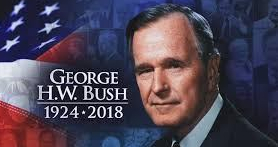
President George Herbert Walker Bush: An Elegant, Gentlemanly President

The year was 1989, my husband and I were new to Nashville and President George H.W. Bush was scheduled for an appearance here. My mother–a proud resident of Odessa, the sister city of Midland, Texas, the former home of our 41st and 43rd presidents–asked me during a phone call if I was planing to go see him.

“I wouldn’t walk across the street to see that man,” I replied.

My mother was taken aback. She knew I wasn’t a Republican (she was, though she claimed to be an Independent) but she had reared my brother and I to be respectful of the presidency. Once a president was elected, he was, in every way, my mother’s president and she treated him as such. She was disappointed in me.

“He is our president,” she said. “Well he’s not mine,” I shot back. “I didn’t vote for him.”

“That’s too bad that you feel that way,” I remember her saying. And that was that.

Now, almost thirty years later, I wish I hadn’t said that. More importantly, I wish I hadn’t thought that–and I’m sorry. I’m sorry for disrespecting the youngest U.S. Navy pilot of WWII, a hero who was shot down over the Pacific and rescued by a submarine–one of our’s, thank God–though his crew perished. I’m sorry for disrespecting an elegant, gentlemanly president, who rose through the ranks of politics and reached across the isle, yes, because it was expedient and because it was the right thing to do for the betterment of the country he led. And I’m sorry for disrespecting my mother’s example.

My mother’s gone now and, of course, so is President George H.W. Bush. As for me, I’m still not a Republican. But I am a lot older now and, thank the good Lord, I’m wiser. If I had it to do all over again I still don’t think I would go and see President H.W. Bush, but I would be a lot more gracious about not going and about my explanation as to why.

God’s speed President Bush…And much respect.

Great Cinematic (TV) and Literary Characters Series: Carmela Soprano (as portrayed by Edie Falco) The Sopranos


No she doesn’t bring home the bacon. And that kind of bothers her. But she does fry it up in the pan. Carmela Soprano takes her responsibilities as a mother seriously. Very seriously. You don’t mess with A.J. and Meadow. Unh uh. There’s just about nothing she wouldn’t do for them.

And she’s a good wife too. Sometimes–after a few drinks, and a slow dance or two, with nostalgia coursing through her veins–she can still make her husband feel like a real man…And a normal human being. That says a lot, considering who her husband is.

Carmela hates what Tony does for a living. She tries not to think about it, but it’s hard. Exercise helps. Her stomach is as flat as a school girl’s. Flatter than her daughter’s.

It also helps to shop. Carmela has a lot of buying power even though sometimes Tony gets a stick up his…well, you know…and pulls her purse strings too tight. She hates it when he does that. She’ll only put up with so much before she puts her foot down. Two can play at that game.

Another thing she really hates: Tony’s serial cheating. It takes a toll on her. She gets depressed about it, even drinks too much sometimes because of it–and that’s not like her at all. If Tony doesn’t watch out he might just drive her into the arms of another man. Men find her very attractive in a classy kind of way. Sometimes the way her priest looks at her, she could swear…

Speaking of her priest, Carmela would have left Tony a long time ago if not for the church. She takes her vows very seriously. There’s almost nothing she wouldn’t do for her parish. She’s only too happy to entertain in her home–church or otherwise. And why not? They certainly have room for it.

She even makes all the side dishes when Tony has his big barbecues. Talk about work. You try cooking for that bunch.

Everybody gets treated the same way too, from the gardener to Tony’s crew, to the alderman, to her next door neighbors, the Cusamano’s. She doesn’t play the snob game. Her best friend, Rosalie, never attended day one of college and it shows. Still, she can take Ro just about anywhere without feeling the slightest bit ashamed.

Friendship is important. And Carm’s a good friend. Nobody knows how hard it is to be married to someone like Tony unless you’re married to someone like Tony. That’s why she and the other guy’s wives are so close. She’s even close to Ginny Sacrimoni and Ginny is…Ahem…morbidly obese. Even so, when Ginny was having a run of bad luck, Carm didn’t hesitate to come right over with her brand new Porsche Cayenne–to cheer her up, of course.

But back to Tony and the church…She honestly fears for her husband’s soul. That’s another reason she sticks with him. She’s his conscience, the only real spiritual influence he has. If not for her, he would drown in debauchery.

And here’s the main thing: She just doesn’t have the heart to take A.J. and Meadow away from their dad. Meadow and Tony have always been so close. And A.J. is a boy. Boys need their fathers.

Tony is a good dad. He really loves his kids.

…And he doesn’t put up with A.J. back talking her for one minute.


Double Dutch Bust: A One Hit Wonder, a Ton of Coke and a Dentist’s Dirty Laundry, Conclusion

Recap of Part II -1982, Dentist and cocaine entrepreneur Larry Lavin settles into a quiet  Philadelphia suburb in the Main Line, one of the most exclusive neighborhoods in the United States, while recording artist Frankie Smith enjoys the meteoric rise of his hit record Double Dutch Bus. But Smith receives no royalties from record sales. Though Lavin and Smith have never met, they are connected through record label, WMOT, which has been hijacked as a money laundering operation for Lavin’s cocaine empire. WMOT executive, and Lavin co-conspirator, Mark Stewart offers a payment of twenty thousand dollars when Smith complains about missing royalties.

I suppose we had a good run though. We moved a lot of good product and I made a good deal of money, much more than I would’ve seen just filling cavities and capping teeth. A solid dental practice is nothing to scoff at…until you know how much money you can make numbing people in other ways.–Larry Lavin*(Journal entry)

Sometimes he would laugh about it, but not in front of Marcia. She got pissed at stuff like that. Sometimes, though, he couldn’t help it. “What’s so funny?” she would ask. “Oh nothing,” he would say and then he’d make something up about their son or one of their friends.

But she knew…Yeah…She knew him all too well.

It wasn’t that he hated cops. Not at all. They were just doing their jobs. Besides, he actually liked Pat. Still…

No. It was the irony of it. The balls out audaciousness of it. Sometimes he felt like he was going to bust a gut because he couldn’t tell anyone. Sometimes he had an insane impulse to yell, “I’m Larry Lavin. The Yuppie Conspiracy guy. The mastermind. The cocaine kingpin.”

He could imagine the looks on his neighbors faces. The Millers. The Paynes. And the guys at the marina. Roy and Pat. Especially Pat. That would be rich.

How many times had he been on Pat’s boat? And Pat on his? How many beers had they shared? Fish had they caught?

Yes sir…Pat O’Donnell†…The semi retired FBI agent extraordinaire.

I’m here Pat…Right under your nose…

Still, whenever I reflect on everything… I always begin with the same question: Who would’ve thought that a multi-million dollar business would fold because of a song called Double Dutch Bus?.. It is just unfortunate Frankie (Smith)‡  didn’t come directly to me for the money. I would’ve given him double, triple, even quadruple what he claimed we owed him.–Larry Lavin (Journal entry)

Frankie Smith was insulted. He could do math. In fact he was pretty good at it. This was a simple, fundamental equation. Double Dutch Bus had sold over a million copies. His contract with WMOT Records§ had his royalty cut at twenty percent. That was a lot more than the twenty thousand dollar check from WMOT that he deposited in Leumi Le Israel, where record executive Mark Stewart had told him to bank when he signed on with the label.

What’s more, when he asked to speak to a banking manager he was directed into an office where a teller handed him five hundred dollars. “This is your weekly allowance Mr. Stewart has set aside for you,” she informed him. When he asked for a balance and a deposit slip, she told him that was not necessary. The money had nothing to do with his account.

Smith was stunned and confused. Something was obviously wrong. Sketchy. He decided to get a bite to eat at a nearby deli and think things over. While he was waiting in line he recognized another teller from the bank. He joked with her about his big financial windfall, producing the five one hundred dollar bills from his pocket. “The WMOT account?” she asked. He nodded. She laughed. “That’s nothing. People withdraw hundreds of thousands of dollars from that account everyday,” she told him.

Then, to add insult to injury, he got a notice from the IRS. His million selling record and the income he declared did not compute; he was being audited. Smith was flummoxed. He had always earned an honest living and paid his taxes. He didn’t drink or drug, kept a low profile, took care of his mother and, when he wan’t on tour, was pretty much of a homebody. At the same time he honored many of the laws of the hard Philadelphia streets he grew up on. He was no slouch and no snitch.

For several nights Smith tossed and turned, lying between a rock and a hard place. He wanted to be a stand up guy–he really did–but WMOT was giving him a royal screwing. Now he had the Federal Government breathing down his neck–the IRS, no less.

Ultimately he took the bus down to 11501 Roosevelt Avenue. Now the address is part of a huge industrial park. Then it was the Philadelphia IRS processing center.

Some might say it was cowardly, running like that. But I was never afraid of being caught. I knew what I was doing. I knew the consequences. That’s what made it all so much fun, so addicting.–Larry Lavin (Journal entry)

For several weeks in the early spring of 1984, Dental Assistant and Office Manager, Elizabeth Graziani, was having trouble with the phones. There was this clicking…A weird static on the line…Not enough to interrupt phone calls, but irritating nonetheless. She really didn’t think anything of it; she had heard similar static on her own line from time to time.

Months later Elizabeth heard a commotion of screeching tires and yelling outside the dental office. Thinking that there must have been a terrible accident she ran to the window. There she saw a shocking, horrifying sight: Her boss, (Yes, she considered him her friend and why not? He was so kind and generous, especially with children.) Dr. Lavin, was sprawled across the hood of his BMW with a host of armed FBI agents in tactical vests surrounding him. One of the agents had a huge, ugly gun–a pump shotgun, actually–pointed only inches from Dr. Lavin’s face!…

It’s funny how yesterday’s problem can become today’s asset. And vice versa. Just like with his cash.

At one time piles of cash lying around the house caused him to loose sleep. Now his freedom depended on the bundles that he was frantically shoving into cavernous duffel bags.

One point six million dollars. A drop in the bucket, really, of what he had made over the years. But, still, he was grateful that he had stashed it away–just in case. He had also lucked out on the bail. The judge had set it at a very reasonable 150,000.00 despite the prosecutor’s objections.

And then there was the matter of his friends. Marcia was always on his case about them. She called them scum. But they weren’t. Most of them were just like him. Dentists. Lawyers. Friends from the University of Pennsylvania.

Sure, there were a few colorful characters that he had used mostly as couriers, guys that were willing to take huge risks for big rewards. (The big difference between them and him? He was a huge risk/ huge reward kind of guy.) You had to have people like that in an operation like his. Without them he wouldn’t have access to dozens of false identities, credit cards and social security numbers that ensured his family’s new start in Virginia Beach, only three hundred miles away.

Hide in plain sight. That was his motto.

Of course he understood why Marcia was so upset. They were parents, after all. Plus she was pregnant again.

Yeah he could take off and leave most of the money, but the feds would just strip her of everything and they would probably end up indicting her anyway. There was a very real possibility that she would go to prison. He just couldn’t abide that. Especially since he had promised her–all those years ago–that he would quit the business once he could walk away with fifty grand clear.

Did he ever believe that? That he would actually walk away? He wasn’t sure. It was hard to leave with so much money on the table. Nobody could know how hard unless they’d been there themselves.

It didn’t matter now. What was done was done. He would make it up to her. This time he really would go straight…

After the first year, I relaxed and let go. But lately the fear’s been creeping up again. There’s a glance on the docks or at a restaurant that looks accusatory, a knowing smile from a waiter or a neighbor that seems to say they’re waiting for the sirens, the copters, and the cigarette boats to swarm. Somehow, I can’t help but think it’s only a matter of time…I saw Pat just as I was getting on and waved to him. He gave me a strange look at first, and then smiled as if something suddenly dawned on him. Maybe he knows something. I wouldn’t be surprised. This friendship with Pat will probably be the end somewhere down the line.–Larry Lavin (Journal entry)

FBI ARRESTS ALLEGED HEAD OF ’YUPPIE’ COCAINE RING (May 16, 1986 Philadelphia Inquirer)

Lawrence W. Lavin, the former Northeast Philadelphia dentist who allegedly masterminded a major cocaine-distribution ring, was arrested without incident yesterday as he disembarked from a fishing boat in Virginia Beach, Va., the FBI said. Lavin, 31, had been a fugitive since November 1984, a few months after he was charged with heading a $5-million-a-month cocaine ring involving many other young professionals.

He was free on $150,000 bail when he and his then-pregnant wife fled their Devon home. An FBI spokesman in Philadelphia said agents arrested Lavin about 5:20 p.m. as he and another dentist—who did not know Lavin’s true identity—were docking the other man’s 25-foot sport fishing boat at a marina. He was wearing blue jeans and a rugby shirt. He had been using an alias but had made no effort to disguise his appearance, the FBI said.

At the same time agents were arresting Lavin, other agents were arresting his wife, Marcia, at the couple’s home in an exclusive Virginia Beach development known as Middle Plantation, the FBI said. She was charged with harboring a fugitive. Both were being held in Virginia last night pending an arraignment before a federal magistrate. The couple’s two children, including a baby, had been living with them, according to the FBI.

Lavin faces drug charges in U.S. District Court here that could bring him a life sentence if he is convicted. In addition to a 40-count indictment on drug offenses, he is also charged with evading $545,000 in federal income taxes. Federal authorities said the cocaine ring—which they dubbed the “Yuppie Conspiracy”—was one of the largest ever uncovered here, handling up to 175 pounds of cocaine a month. The drug in turn was distributed to others in Pennsylvania, New Jersey, New England and the Southwest, according to federal prosecutors.

More than 50 people, including three graduates of the University of Pennsylvania dental school, two lawyers and two stockbrokers, along with many other professionals, have been charged with being part of the drug conspiracy that Lavin allegedly headed.


Best Double Dutch Bus sample:

  • Gossip Folks by Missy Elliot (2002), ft. Ludacris; Goldmind – Elecktra

Best WMOT Records original recordings; singles:

  • Double Dutch Bus by Frankie Smith (1981) Funk/R&B/ Rap/Hip Hop
  • I Really Love You by Heaven and Earth (1981) R&B/Soul
  • Watch Out by Brandi Wells (1981) R&B/Dance/Electronica
  • Act Like You Know by Fat Larry’s Band (1982) Funk/Hip Hop/ R&B

Larry Lavin served eighteen years in prison. He and Marcia are divorced. She reared their three children in Wisconsin where she still lives. Lavin can no longer practice dentistry.  He currently resides in Tampa, Florida where he is Director of Services for the marketing company One Touch Direct.

†The FBI intercepted a portion of a phone conversation in which Lavin bragged to an associate about being “friends” with a semi-retired FBI agent and about being invited onto his boat. Agents were able to track the phone call to the Virginia/Maryland Coastal area and then distributed wanted posters to all retired agents within that swath living close to marinas. Semi-retired FBI agent Pat O’Donnell of Virginia Beach occupied a boat slip next to fugitive Larry Lavin who was going by the alias of Brian O’Neil.

‡Frankie Smith never recovered his portion of the 1,440,000.00 dollars that was diverted from WMOT Records by Mark Stewart in a money laundering scheme in conjunction with Larry Lavin and The Yuppie Cocaine Conspiracy. Smith still lives in Philadelphia, in the same house that he shared with his now deceased mother.

§ WMOT Records was forced into bankruptcy, was restructured, and bought by CBS/Sony.


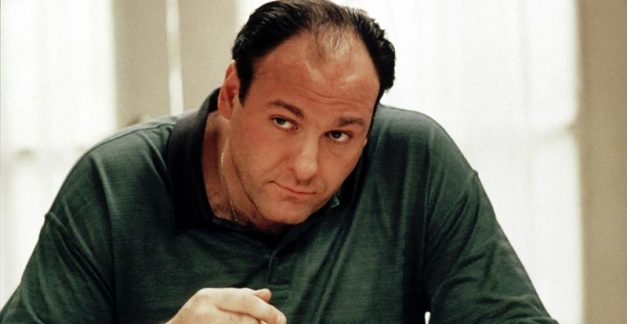
Great Cinematic (TV) and Literary Characters Series: Tony Soprano (as portrayed by James Gandolfini) The Sopranos

Tony Soprano is a man ruled by his consuming appetite. As such, he does not hunger so much as he craves.

The result? He gorges and is obese. Still, he is attractive…Sort of.

Likewise, he does not merely desire, he lusts. So he screws around on his wife. Prodigiously.

Consequently they fight. A lot…But he loves her.

Tony is a mafia boss, so what he covets he steals–within reason. Easily enraged he fights his impulse to arbitrarily kill. It is bad for business. And he is not stupid.

Nor is he a monster. You’d be perfectly safe with him exempting an extreme circumstance.

And your children? Forget about it. They’d be safe with Tony Soprano. He likes kids. Not just his own (he has two, Meadow and A.J.) but all kids and what they represent: A clean slate. A fresh start. Unencumbered potential.

You see, if not for his father–a DiMeo caporegime, the New Jersey faction of the New York family–he might have been a high school football coach. Or a history teacher. Maybe both. Ergo he does not train his son in the tenets of his trade…He likes animals.

Tony lives in a very nice house. A near mansion (though it is excessively beige.)

But don’t be fooled. He doesn’t have it easy. Good help is hard to find, especially in his business.

It’s all comes down to loyalty and honor. The young guys want to rise to the top without putting in any work. They’re lazy and entitled.

The old guys? They’re just as bad–maybe worse. That’s because they’re smarter, more seasoned and resentful because of all the work they’ve put in without rising to the top.

And where does that leave Tony? Pretty close to the top (he has to kowtow to New York) neither young nor old, with no one he can trust. Not even his uncle Junior–his father’s older brother–who taught him how to throw a baseball. Not even his own mother–the most treacherous harpy ever–who taught him how to walk.

What’s more, there’s regret. He wrestles with it and the wisp of conscience he has left. Perhaps that is why he has panic attacks and is forced by desperation and–much to his chagrin–fear to see a psychiatrist.

Perhaps. Rattling skeletons are unsettling.

Well, you know what they say…Uneasy lies the head that wears the crown. But that’s better than the head with two bullets above the ear…


Double Dutch Bust: A One Hit Wonder, a Ton of Coke and a Dentist’s Dirty Laundry, Part II

Recap of Part I: Life long Philadelphia resident and former Gamble and Huff songwriter Frankie Smith pens the funky novelty song Double Dutch Bus. Laid off from Gamble and Huff’s Philadelphia International Records, Smith pitches his song to WMOT Records with no inkling that WMOT is a money laundering front for The Yuppie Conspiracy that supplies most of the eastern coast of United States with cocaine. The Yuppie Conspiracy is headed by twenty-seven year old dentist Larry Lavin, his financial adviser Mark Stewart and a cabal of dentists and other University of Penn alum.   

U.S. Route 30, also known as Lancaster Avenue, links the old money western suburbs of Philadelphia. The locals call it the “Main Line”. The Main Line communities of Villinova, Haverford, Bryn Mawr, Devon and Malvern are some of the most affluent in the United States. Retired Brigadier General John Eisenhower, son of President Dwight Eisenhower, and his wife Barbara lived on Timber Lane in Devon.

Most of the Timber Lane residents were the usual fare–doctors, lawyers and members of the corporate elite, middle aged, retired or soon to be retired. The Eisenhower’s neighbor across the street was a retired admiral and a practicing dentist. Their tall, lanky, puppy-dog-like next door neighbor, Larry, was also a dentist, though you wouldn’t think it. He and his wife, Marcia, were all of twenty-seven years old. The Lavin’s.

Of course, when Larry and his wife, that’s the way most of the neighbors described her, (she was very reserved and rarely spoke unless spoken to) first moved in they caused a bit of a stir. They were so young.

There were nods and waves. A few hellos. They seemed nice enough.

Weeks turned into months–plenty of time for them to have everything unpacked and put away–and, yet, there was Larry, always manicuring the yard are puttering around the garage. Soon they were making renovations to their home, putting in a pool and a solar light system. Neither he nor Marcia left for work in the mornings.

Inevitably, Larry wandered over to the Eisenhower’s yard and they got acquainted. He was very friendly and helpful, always offering to assist with a yard chore or a small home maintenance job. He and Marcia were generous with the neighborhood children too. The Eisenhower’s grandchildren excitedly showed off full sized Snicker bars the Lavin’s handed out at Halloween.

Larry told his neighbors that he had gotten into managing rock bands in college as a fluke. He had unexpected success which led him into the recording business and a financial windfall.

Always gregarious, he invited neighbors into his home to see the renovations and decor. During the tours he proudly showed off the encased gold record that hung in his den: The Double Dutch Bus, Frankie Smith, WMOT Records.

Barbara Eisenhower was especially impressed with Larry. It showed good character for him to finish dental school even though he was making so much money in the music business. Larry explained that he was waiting for the right opportunity to practice dentistry. He wanted to buy an established practice that catered primarily to the underprivileged and undeserved. It was his way of giving back.

The year 1982 was shaping up to be a good one for Frankie Smith and his mother. They made some modest purchases for their home, things that would go with Frankie’s gold record that hung in the small living room above the piano that his mother had bought for him by squirreling away ten to twenty dollars at a time. There was plenty of money to pay the bills now, and then some, since Frankie was the opening act for the Kool and the Gang and Rick James tours. He made appearances on Soul Train, American Bandstand and The Merv Griffith Show and, on a particularly memorable evening he preformed on The American Music Awards. His mother was very proud that night. She cried.

Frankie Smith had arrived thanks to a Double Dutch Bus that he rode all the way to #1 on Billboard’s R&B chart and to #30 on the Billboard Top 40 chart. The single sold well over a million copies.

There was just one problem. He hadn’t received a dime from royalties. Smith found that especially galling.

For years he had dreamed of writing a hit song. He had worked diligently, patiently and more than once was on the cusp of his dream. Now he had achieved it. Every time he heard Double Dutch Bus on the radio he felt like a proud papa, but in his songwriter’s mind he had yet to see his baby. In his songwriter’s mind, he was covering his own song.

After months of waiting for a check he called the WMOT booking keeping office. “I’m calling about my royalties,” he told the bookkeeper. She put him on the the line with Mark Stewart.

Mark Stewart was an enigma to the artists at WMOT. Roaming the halls with his face frozen in a scowl, he had few words for anyone. And when he did speak it was obvious that he knew virtually nothing about the record business. He wasn’t into Funk, he was in a funk–a perpetual one at that.

There was a good reason for Stewart’s surliness. Bad investments and over reaching had driven him to the brink of financial ruin. It was desperation that pushed him over the line of shady real estate deals and boxing promotion and into a full fledged life of crime with coke dealer Larry Lavin.

Lavin’s money was like a god send, propping up some of his ill advised investments. He poured over 500 thousand of Lavin’s cash into money laundering ventures like WMOT Records, The Philadelphia Arena, which he renamed The Martin Luther King Arena and a minor league basketball team, The Lancaster Red Roses.

But the cash infusion couldn’t save the arena or the Red Roses. Stewart eventually hired Pagan motorcycle gang member James “Horrible” Holt to burn down the arena in an insurance scam. Only WMOT Records proved profitable and that, in large part, was due to Frankie Smith’s hit record, Double Dutch Bus.

Stewart didn’t know much about Smith, he couldn’t care less about the artists at WMOT, but he did acquaint himself with a few details he viewed as essential, namely zip code and education. Smith’s address of 51st and Dearborn told him everything he needed to know.

So when he was informed that Smith was on the line inquiring about his overdue royalties, Stewart was nonplussed. There were much bigger things on his plate to be worried about. He picked up the phone.

“Mr. Smith, I’ve been meaning to call you,” he said. “I’ve got a check here with your name on it for twenty thousand dollars.”

To be continued…

The Double Dutch Bust: A One Hit Wonder, a Ton of Coke and a Dentist’s Dirty Laundry, Part I


Frankie Smith was worried about his mom. Her health was going down and he didn’t know how long she was going to be able to hold up to the shift work at the commissary of the Philadelphia Naval Hospital where she had worked for years. Of all the times for me to be out of a job, it had to be now, he thought.

Only a few months before things had been going so good. He had earned an office and a placard with his name and his title: Songwriter and Producer, Philadelphia International Records. He was collaborating with Archie Bell and the Drells, Harold Melvin and the Blue Notes and their sexy, enigmatic singer, Teddy Pendergrass. What’s more, he had the ear and the respect of Kenny Gamble of Gamble and Huff, the songwriting and production team that had founded the label that represented top shelf talent like The O’jays, The Three Degrees, MFSB, Billy Paul and Lou Rawls. Gamble and Huff and their juggernaut record label were the architects of the lush, yet, funky style know as The Philadelphia Sound.

But Gamble and his partner Leon Huff, along with Clive Davis of CBS Records and Davis’ assistant David Wynshaw, among others, were ensnared in a federal payola investigation and Philadelphia International Records was temporarily, as it turned out, forced to shutter it’s doors. Frankie Smith was out on his ear. And the bills were piling up.

Things had gotten so bad that he applied to The Philadelphia Transportation Company as a bus driver, but they hadn’t responded. As he sat in the living room of the tiny house that he had always shared with his mother (except for the few years he had spent at Tennessee State University, trying to earn a bachelors degree in elementary education) he began to circle security guard jobs in the help wanted section of the paper. Through an open window he heard a group of neighborhood girls chanting as they jumped rope in an intricate, athletically rhythmic style. Double dutch, they called it.

The chanting was momentarily interrupted by some guys who we’re trying to clear the street so they could play basketball. The girls weren’t having it.

In Smith’s songwriter’s mind the bickering, the sing-song chanting, the clapping, and syncopated slap of rope against pavement merged with his pending bus driver application and a funked up version of the Pig Latin he mastered as a child. In a moment of serendipity he wrote the lyrics on the back of an over due gas bill.

There’s a double dutch bus coming down the street
Moving pretty fast
So kinda shuffle your feet
Get on the bus and pay your fare
And tell the driver that you’re
Going to a Double Dutch Affair

Hilzi, gilzirls! Yilzall hilzave t’ milzove ilzout the wilzay silzo the gilzuys can plilzay bilzasket-bilzall

(Translation: Hi girls, you have to move out the way so the guys can play basketball.)

Say wizzat? Nizzo-izzo wizzay

(Translation: Say what? No way!)

Yizzall bizzetter mizzove
(You all better move.)

Say wizzat? Willzy illzain’t millzovin’
(Say what? We ain’t moving.)

Willze illzare plizzayin’ dizzouble dizzutch! dizzouble dizzutch! dizzouble dizzutch!
(While we’re playin the double dutch! The double dutch! The double dutch!)

Millze cillzan sillzome plilzay dilzzouble dilzutch!
I see somebody’s playin the double dutch!

Suddenly the weight of the world was lifted off Frankie Smith’s shoulders. He had just written a hit! A big glorious hit! And he knew it. This little song–no not his best song, a novelty song, yes, a kid’s song–was the answer to his prayers. If only he could pitch it to Kenny Gamble, but of course he couldn’t and he couldn’t afford to sit on it either.

His best option at that particular moment was WMOT Records. Smith was aware of the labels shady reputation but he had a relationship with a couple of producers who had once offered him a song writing gig there. He was desperate, but he wouldn’t let them know that. The song was solid. It should sell itself.

Dr. Larry Lavin was worried about his cash. He had too much of it. One of the couriers he paid to make runs to various banks, exchanging stacks of it into more manageable hundred dollar bills, had been robbed of a hundred grand. Even though it had happened right outside the student dental clinic where there were lots of witnesses and despite the courier having a nasty gash on her head, his partners were saying that she had set the whole thing up.

It was starting to get to him a bit. Too much drama.

Yes, he was making more money than he ever thought possible. And, yes, he was about to finish up his voluntary year’s residence. Soon he would be able to set up his own dental practice–the perfect front for his real business–but his fiance was getting more and more paranoid. She was starting to see armed robbers in her chicken soup.

A lawyer he knew gave him a piece of paper with a guy’s name and a number on it. A financial adviser/investor. Now that guy sat across from him at his kitchen table. He wore an expensive tailored suit and a tasteful gold necklace. Several chunky gold rings adorned his fingers; his hair was precisely cut, his beard neatly trimmed.

Lavin liked what he saw. The guy’s name was Mark Stewart. He spoke expertly about tax shelters, about converting Lavin’s cash into mortgages and certificates of deposit. He wanted to sell him interest in his properties and businesses and start paying him a salary from a parent company, all tricks of the money laundering trade. One of the companies Stewart had shares in was WMOT Records.

The engineers snickered and rolled their eyes. The song was bad enough, some dance number about jumping on a bus and jumping rope, but that nonsensical gibberish had to go. Sophomoric. Kids stuff.

Frankie Smith wasn’t surprised as he watched their obvious mockery through the recording room window. Go ahead and have your fun, he thought. The hook screamed H.I.T. record. He would have the last laugh–all the way to the bank.

Double Dutch Bus dropped in the fall of 1981. Everyday, for the first few weeks after the release, Smith and his producer, Gene Leone, anxiously went up and down the radio dial listening for the song…Crickets. 

While the lack of respect and enthusiasm from the recording crew didn’t surprise Smith, WMOT’s ambivalence toward his project did. The label didn’t lift a finger to promote Double Dutch Bus. What’s more, the whole vibe at the company was haphazard and lackadaisical; it ran nothing like the well oiled hit producing machine that he was accustomed to at Philadelphia International.

Undaunted, Smith took matters into his own hands. He loaded up the trunk of his rickety old Thunderbird with hundreds of copies of Double Dutch Bus and embarked on an East Coast odyssey, from one city to the next, dropping off his song at college radio stations, dance clubs, getting it into the hands of mobile DJ’s, and hitting every commercial radio station that would let him through the door.

Months later when he walked up the steps to his front door–he was then, as he is now, an unassuming, small man with rounded shoulders and a permanent limp–he was tired and a bit weary. His mother met him at the door with a wide beautiful smile. “They’re playing it baby,” she said. “They’re playing your song.”

To be continued…


Great Cinematic and Literary Characters Series: WALL-E

Where does beauty come from? Is it a mere roll of the dice, a collaborative collision of nuclei, cells, chromosomes and genes? So completely accidental. So arbitrarily random. Is it purely chance, like discovering a vein of gold in a rock slide?

Is that why we value it so much? Because it’s so rare?

Wall-e, the little trash compactor robot, wasn’t made with beauty in mind. He was designed to perform a task– a dirty task at that. Accordingly he is boxy, durable and economical. Hardly sexy.

Moreover he is behind the times, obsolete and rusty. And scarred.

But Wall-e is a poet. No he doesn’t speak it–he barely speaks at all–he whirs, and beeps…And sighs. He doesn’t write it either.

Poetry in motion? No. He is slow and clunky, patched together with spare parts that are always breaking down.

Wall-e is a poet at heart. His scroll and quill are the deeds inspired by his own gentle soul.

Take his relationship with Hal, only Wall-e could find the beauty in a cockroach. When we turn on the light and a cockroach scurries across the floor we are horrified. (Okay. Not all of us. Most of us. Bear with me here.)

We do at least one of these things:

  1. Scream.
  2. Step on it.
  3. Spray it with bug spray.
  4. Call our significant other to step on it.
  5. All of the above.

Not Wall-e. He nurtures Hal. He’s happy to see Hal of the mornings and, of course, Hal is happy to see Wall-e. When he accidentally rolls over Hal, he is mortified and heartbroken. Thank goodness Hal is virtually indestructible. He shakes it off, just a little worse for the wear and tear.

(Sigh…Cockroaches and Keith Richards.)

But while Hal is utterly content with his garbage filled world and endless supply of Twinkies, Wall-e is not. He longs for a specific kind of companionship that Hal cannot afford.

Enter Eve, a state-of-the-art, voluptuous robotic probe. She is sent to earth to scan for organic signs of life.

(No. Hal doesn’t count.)

Efficient, disciplined and mission orientated she is disinterested in, and annoyed by, Wall-e. If she had a nose it would be turned skyward.

Wall-e thinks Eve utterly beautiful and himself outclassed, but he is so smitten that he cant help from perusing her–deferentially, tenderly. And to his dismay, clumsily.

Gradually, Eve’s reserve and superiority complex starts to thaw. She begins to understand what we already know…She really is out of Wall-e’s league.


A Happy Halloween Song, a Children’s Poem


Goblins, witches,

Frankenstein monsters

Sing a happy

Halloween song


Little children

Up and down the street

Ring the doorbell

Saying trick or treat


Leaves are blowing

Soon it’s snowing

Turkey, stuffing

Pumpkin pie


Lights a twinkling

Hallowed evening

Starry skies

Sleigh bell rides


Tis the season

Of believing

Counting moments

Hopeful eyes


First come costumes

Trick or treating

Crisp October

Night of fright


–Pamela Lowe Saldana

for Blaine and Zoe

Newer Posts
Older Posts